
Key Takeaways
- Programmatic job advertising uses software and algorithms to automatically distribute your job postings, place bids, and shift budget toward the channels producing real applicants.
- It replaces the flat-fee, “post and pray” model with pay-for-performance advertising that optimizes in real time.
- The biggest wins: lower cost-per-apply, less manual work for your team, and full-funnel reporting that shows what your spend actually returned.
- It works best for high-volume hiring, multi-location recruiting, and hard-to-fill roles where standard job board postings stall.
- Platforms like DE Amplify from DirectEmployers handle the technical setup and campaign management, so recruiters get the results without becoming media buyers.
End of summary box.
Recruitment budgets are under a microscope, labor markets shift by the week, and most talent acquisition teams still allocate ad spend the way they did a decade ago: manually, channel by channel, based on gut feel and last year’s vendor relationships. Programmatic changes that. It brings the same automation that transformed consumer advertising into recruiting, and it’s quickly becoming table stakes for teams managing serious hiring volume.
Here’s what it is, how it works, and how to tell whether it belongs in your recruiting stack.
What Is Programmatic Job Advertising?
Programmatic job advertising is the automated buying, placement, and optimization of job ads using software rather than manual decisions. Instead of a recruiter choosing where to post a job and paying a fixed price, algorithms distribute each job across the channels most likely to produce qualified applicants, then continuously reallocate the budget based on real performance data.
Think of how display ads seem to follow you around the internet after you browse for running shoes. Behind the scenes, software is deciding, in milliseconds, where to show that ad and how much to bid for your attention. Programmatic recruitment applies the same logic to jobs: the “audience” is job seekers, and the goal is applications and hires, not clicks.
How Does Programmatic Job Advertising Work?
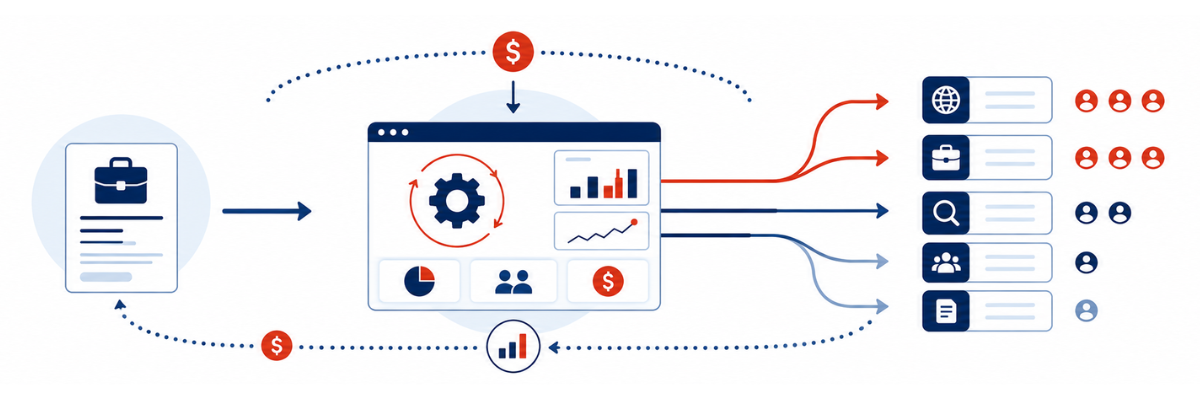
Under the hood, most programmatic recruitment platforms run a continuous loop with five steps.
- Your jobs feed in automatically
Your open roles flow into the platform through an XML feed from your applicant tracking system, refreshed throughout the day. When a job opens, it enters the campaign. When it’s filled, the spend stops. No copying and pasting postings manually from platform to platform. - Rules and budgets are set
You (or the platform’s campaign team) define budgets, pacing, and priorities. Hard-to-fill nursing roles in rural markets might get more aggressive spend than easy-to-fill retail roles in a metro area. - Algorithms place your jobs
The software distributes each job across job boards, aggregators, and niche channels based on what historically performs for that role type and geographic location. Placement decisions are driven by data, not by vendor preferences or incentives. - Performance is tracked to the apply, not the click
The platform measures cost-per-click, cost-per-apply, and application volume by channel and by job, giving you a full-funnel view of what your money returned. - Budget shifts to what’s working
This is the part that matters most. Underperforming channels get deprioritized and winning channels get more spend, automatically and continuously—and this only improves over time as data builds.
Programmatic vs. Traditional Job Postings: A Before and After
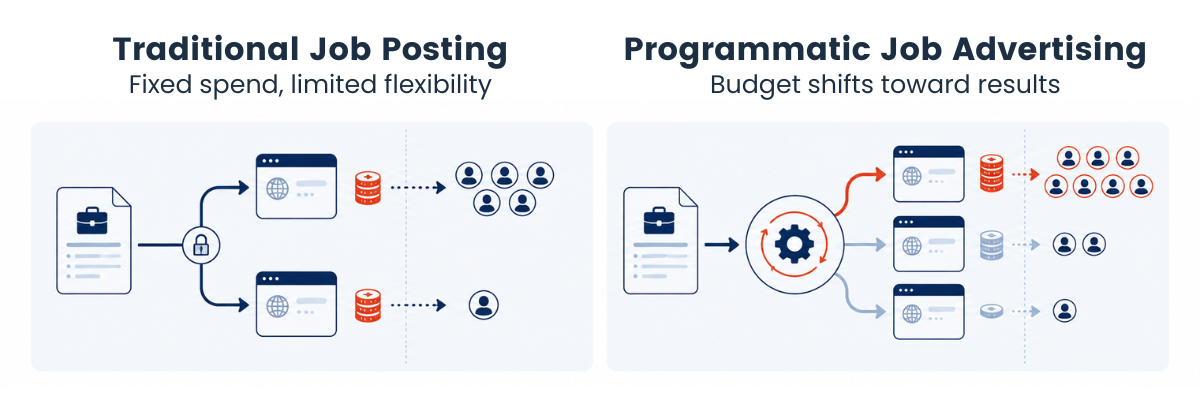
Before (manual): A recruiter posts 40 warehouse jobs to two job boards at a flat fee. Three weeks in, one board has delivered 80% of the applicants, but the budget is already committed to both. Nobody notices until the monthly report, and by then the money is spent.
After (programmatic): The same 40 jobs are distributed across a dozen channels. Within days, the algorithm sees that a regional aggregator is producing applies at a fraction of the cost of the big job boards and shifts budget there. The recruiter never touches a bid. Cost-per-apply drops, and reporting shows exactly where every dollar went.
That’s the core trade: flat fees paid regardless of results versus performance-based spend that follows the applicants.
Why Are Recruiters Adopting Programmatic Recruitment Now?
Three reasons come up again and again:
Budget accountability. HR leaders are being asked to justify recruitment advertising spend with the same rigor as any other line item. Programmatic delivers auditable, channel-level reporting on cost-per-apply and cost-per-hire, in near real-time.
Speed. Bid landscapes on major job sites shift constantly. Manual adjustments made monthly (or never) can’t keep up with algorithms adjusting in real time.
Team capacity. Automated job distribution frees recruiters from media buying so they can spend time on what software can’t do—candidate engagement: interviewing, selling candidates, and advising hiring managers.
What Should You Look for in a Programmatic Job Advertising Platform?
Not all platforms are built the same. Ask about:
- Transparency: Can you see exactly where your budget went and your true cost-per-apply by channel, or is reporting a black box of blended rates?
- ATS integration: Feed setup should be handled for you, with no developer lift on your side. DE Amplify customers, for example, are provided with detailed integration instructions that provide an easy to setup guide to get started!
- Managed service: Do you get experienced campaign managers and support teams?
- Contract flexibility: Be wary of long annual commitments; hiring needs change, and pivots in priorities as your hiring needs dictate.
- Incentive alignment: A vendor paid on your ad spend has a reason to want you spending more.
This is where DE Amplify, the programmatic job advertising platform from DirectEmployers, stands apart–through transparency, integration, campaign management, and more! DirectEmployers is a nonprofit employer consortium founded in 2001 with a mission of reducing online recruitment costs, so the incentive is making your budget go further, not growing it. DE Amplify pairs algorithmic distribution and automated spend reallocation with white-glove campaign management, full spend transparency, and no long-term contracts.
At its core, programmatic job advertising is a smarter operating model for recruitment advertising: automate the distribution, measure to the apply, and let the budget follow the results. Teams that make the switch typically see meaningfully lower cost-per-apply within the first 30 to 60 days as the algorithms learn what works.
Ready to see what your recruitment budget could actually return? Talk to the DirectEmployers team about DE Amplify and get a campaign live in days, not months.
Frequently Asked Questions About Programmatic Job Advertising

Let’s chat!
Fill out this form and we'll contact you shortly to schedule a demo.