
Key Takeaways
- OIRA approved OFCCP’s Section 503 information collection without change on July 16, 2026, extending Form CC-305’s approval through July 31, 2029.
- Form CC-305 is the Voluntary Self-Identification of Disability form federal contractors use under 41 CFR Part 60-741.
- OFCCP is separately pursuing a final rule that would eliminate the disability self-identification requirement and the 7% utilization goal; that rule has not yet been finalized.
- Public comments on the proposed Section 503 changes were 94% opposed, based on an independent analysis of 612 unique submissions.
- Until a final rule takes effect, federal contractors must continue using Form CC-305 and maintaining related recordkeeping as currently required.
End of summary box.
On July 16, 2026, the Office of Management and Budget (OMB)—acting through its Office of Information and Regulatory Affairs (OIRA)—approved, without change, the OFCCP’s information collection request supporting Section 503 of the Rehabilitation Act of 1973. That approval keeps Form CC-305, the Voluntary Self-Identification of Disability form, in force for federal contractor use through July 31, 2029. Nothing about the form or how contractors use it has changed. What makes this notable is timing: OFCCP has a pending final rule in the works that would eliminate the disability self-identification requirement altogether. For now, contractors’ obligations under 41 CFR Part 60-741 remain exactly as they were.
What OMB Approved
Under the Paperwork Reduction Act, federal agencies must periodically ask OMB to reauthorize the forms and recordkeeping requirements they impose on the public. OFCCP submitted its request to renew the Section 503 recordkeeping collection (OMB Control Number 1250-0005) on April 23, 2026. OMB’s July 16 notice, issued through OIRA Deputy Administrator Dominic J. Mancini, approved that request “without change” and set a new expiration date of July 31, 2029, extending the life of Form CC-305 for three more years.
The approval also reflects updated burden estimates. OFCCP’s projected number of responses rose from roughly 35.1 million to 41.6 million, largely a function of workforce growth and application volume across the contractor community, while estimated burden hours and associated costs actually declined. None of this changes what contractors are required to do. Form CC-305 remains the approved tool for inviting applicants and employees to voluntarily self-identify as individuals with disabilities, and covered contractors should continue distributing and retaining it as they have been.
A Rule in Motion Aimed at the Same Form
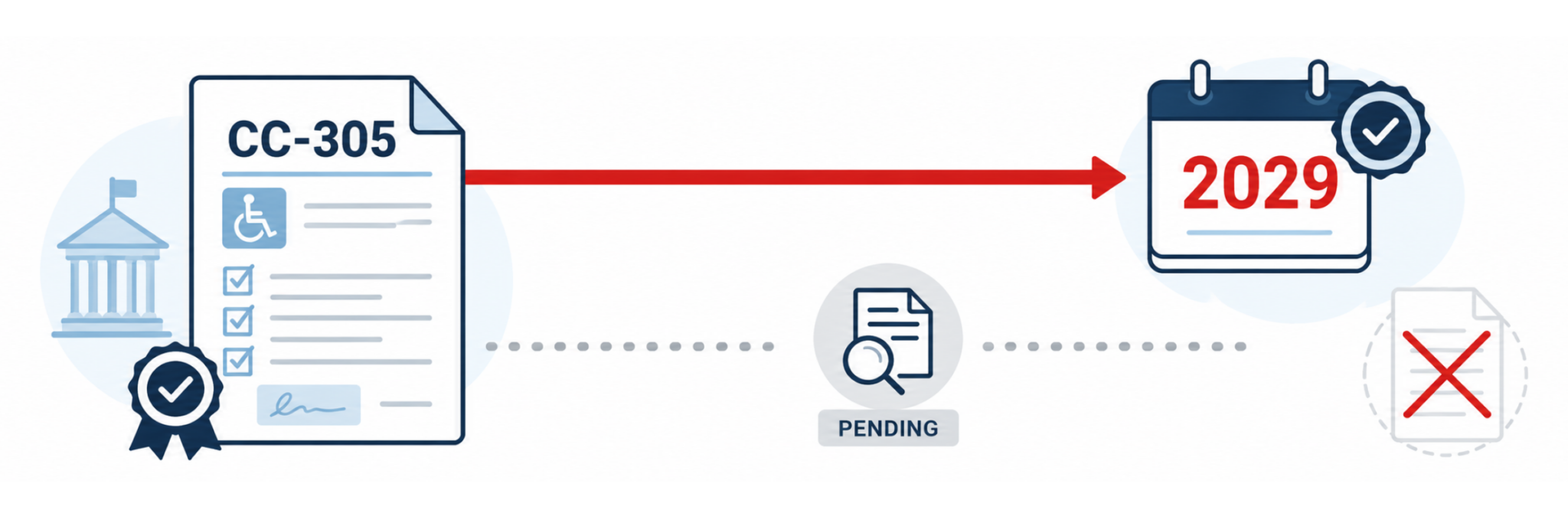
OMB extended Form CC-305 through July 2029, while a separate pending rule could eliminate the disability self-identification requirement. Current requirements remain in effect.
Here’s where the picture gets more complicated. OFCCP is separately working through a rulemaking, published as a Notice of Proposed Rulemaking on July 1, 2025, that would substantially rewrite the Section 503 regulations. Among the proposed changes: removing the disability self-identification requirement for applicants and employees, eliminating the 7% utilization goal, and stripping out the related data collection provisions at 41 CFR 60-741.44(k). That rulemaking is currently sitting in the Final Rule stage on OIRA’s unified agenda, with agency contacts still listed and no final rule yet published as of this writing.
The comment period drew significant public engagement. Response during the comment period yielded over 651 comments, overwhelmingly opposing the proposed changes, with many commenters, including individuals with disabilities, arguing that removing self-ID data would make it harder for both employers and regulators to measure the effectiveness of disability inclusion efforts.
See the comments DirectEmployers submitted on behalf of its Members in DE Connect.
So contractors are looking at two regulatory tracks moving in opposite directions at the same time: one extends the current CC-305 collection through 2029, the other proposes to eliminate the requirement behind it. Until a final rule is published and takes effect, the extension controls, and the current framework stands.
What This Means for Federal Contractors
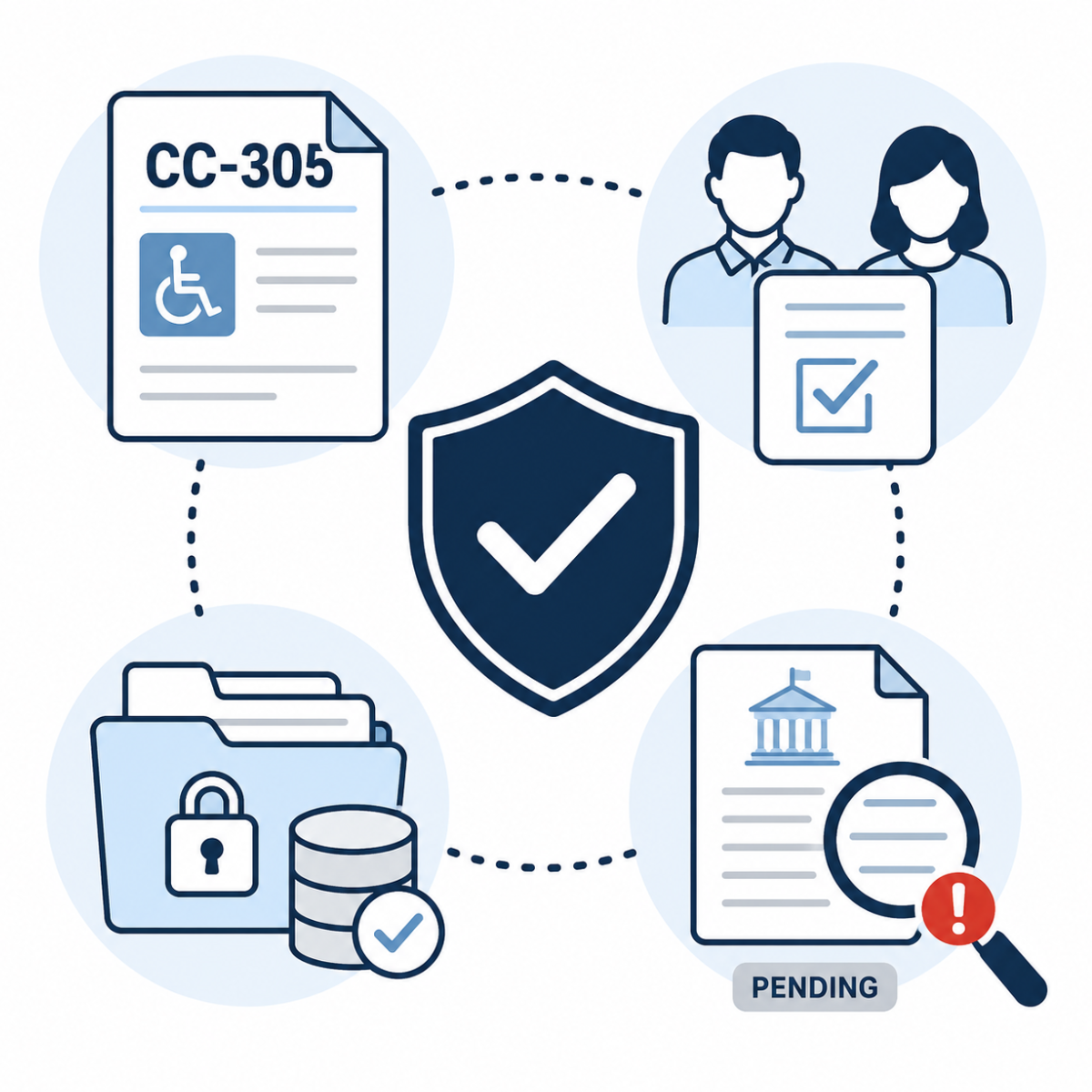
OMB extended Form CC-305 through July 2029, while a separate pending rule could eliminate the disability self-identification requirement. Current requirements remain in effect.
For now, the compliance posture is unchanged. Contractors should:
- Keep using Form CC-305 exactly as they have been, at pre-offer and post-offer stages and periodically for current employees, per existing 41 CFR 60-741 requirements.
- Continue maintaining self-ID data and the related recordkeeping tied to 60-741.44(k), since none of that is affected by the extension itself.
- Track the Section 503 final rule closely. If and when it publishes, it could change self-identification and utilization goal obligations going forward, but proposed changes are not effective until a final rule is issued.
- Avoid getting ahead of the rulemaking. Discontinuing self-ID collection now, in anticipation of a rule that hasn’t been finalized, would create a compliance gap under the currently controlling regulations.
Staying Ahead of a Moving Target
This extension is a reminder that federal contractor compliance obligations don’t always move in a straight line. DirectEmployers will continue tracking the Section 503 rulemaking as it moves toward a final rule and will alert Members as soon as there’s a substantive change to report. Members with questions about self-identification requirements or Section 503 obligations are encouraged to reach out to their DirectEmployers Membership Team, connect with peers through DE Connect, or attend monthly Office Hours to chat directly with an HR compliance expert.
THIS COLUMN IS MEANT TO ASSIST IN A GENERAL UNDERSTANDING OF THE CURRENT LAW AND PRACTICE RELATING TO OFCCP. IT IS NOT TO BE REGARDED AS LEGAL ADVICE. COMPANIES OR INDIVIDUALS WITH PARTICULAR QUESTIONS SHOULD SEEK ADVICE OF COUNSEL.

Let’s chat!
Fill out this form to indicate which solutions you’re interested in and we'll contact you shortly to schedule a demo.