
Key Takeaways
- Programmatic job advertising uses software and algorithms to buy, place, and optimize job ads automatically, replacing manual posting and flat-fee guesswork.
- Understanding a handful of core terms, like cost-per-apply, bidding, and budget pacing, is enough to evaluate vendors and read performance reports with confidence.
- The biggest mindset shift: you stop paying for placement and start paying for outcomes, with budget flowing continuously to the channels that produce qualified applicants.
- Platforms like DE Amplify from DirectEmployers handle the technical mechanics, so recruiters can focus on candidates instead of media buying.
End of summary box.
Why Recruiters Need to Speak Programmatic
If you’ve ever posted a job, paid a flat fee, and crossed your fingers, you already know the problem programmatic job advertising was built to solve. Recruitment advertising budgets are under more scrutiny than ever, and “we posted it on the big boards” no longer satisfies a CFO asking what those dollars actually returned.
Programmatic recruitment borrows a page from digital marketing. The same technology that makes display ads follow you around the internet after you browse for running shoes can put your warehouse associate opening in front of the right candidates, on the right sites, at the right price, without a recruiter touching a single posting.
The catch? The vocabulary can feel like alphabet soup. This glossary translates the essential terms into plain, relatable English, so your next vendor demo or performance report makes sense from the start.
Core Concepts Every Recruiter Should Know
What Is Programmatic Job Advertising?
Programmatic job advertising is the automated buying and placement of job ads using software and algorithms rather than manual posting. Instead of a recruiter deciding where each job goes and paying a flat fee, the technology distributes jobs across a network of sites and continuously shifts budget toward the sources delivering the best applicants.
What Is Automated Job Distribution?
Automated job distribution is the process of syndicating your open roles across many job sites, aggregators, and niche boards simultaneously from a single feed. One connection replaces dozens of individual postings, and listings update automatically as jobs open and close.
What Is a Job Feed (XML Feed)?
A job feed is a structured file, usually XML, that lists your open positions and their details so advertising platforms can read them automatically. Your applicant tracking system generates it, and the programmatic platform refreshes it several times a day, which keeps stale jobs from wasting budget.
The Money Terms: How Programmatic Pricing Works
What Is Cost-Per-Click (CPC)?
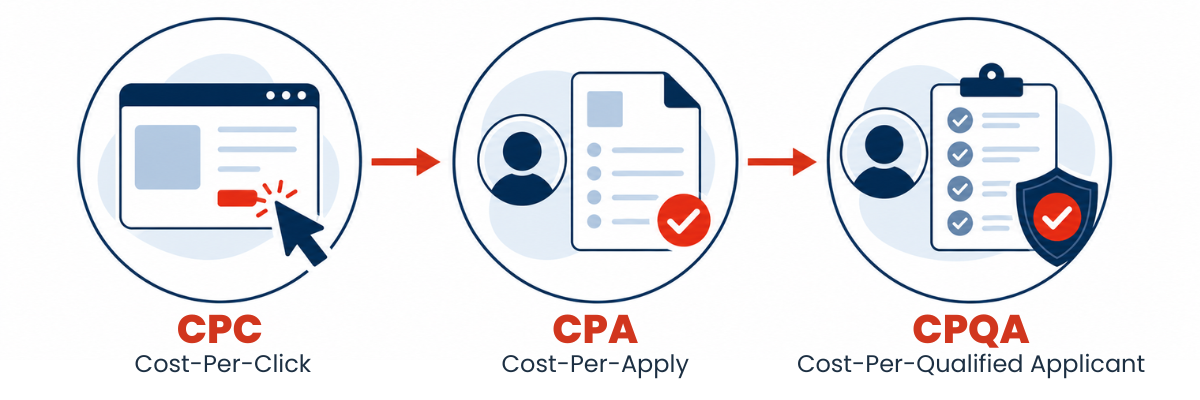
Cost-per-click is the amount you pay each time a job seeker clicks on your job ad. CPC is the most common pricing unit in programmatic recruitment, but on its own it only tells you about traffic, not talent.
What Is Cost-Per-Apply (CPA)?
Cost-per-apply, sometimes called cost-per-applicant or cost-per-application, is your total ad spend divided by the number of completed applications it produced. CPA is the metric that matters most to recruiters because it measures candidates, not clicks. Employers using optimized programmatic advertising typically see CPAs 25 to 50 percent lower than flat-fee job board postings.
What is Cost-Per-Qualified Applicant (CPQA)?
Cost per qualified applicant (CPQA) is a recruiting metric that measures how much you spend to attract one applicant who actually meets the minimum requirements for a role, not just anyone who applies. Companies use CPQA to compare job boards, ad platforms, and sourcing channels, and to optimize where they put their recruiting budget. The tricky part is defining “qualified,” which varies by organization. Common definitions include applicants who pass an initial screen, meet knockout criteria on the application, or advance to a recruiter phone screen.
What Is Bidding?
Bidding is how programmatic platforms compete for ad placement, offering a price for each click or application in a real-time marketplace. Algorithms raise bids on hard-to-fill roles that need visibility and lower them on jobs already attracting plenty of applicants.
What Is Budget Pacing?
Budget pacing is the controlled release of your advertising budget over a campaign’s lifespan so it isn’t exhausted in the first week. Good pacing keeps hard-to-fill roles visible for the entire time they’re open rather than going dark mid-month.
The Optimization Terms: Where the Magic Happens
What Is Rules-Based vs. Algorithmic Optimization?
Rules-based optimization follows “if this, then that” logic a human sets up, such as pausing a job after 100 applications. Algorithmic optimization goes further: machine learning analyzes performance across every channel and reallocates spend automatically, faster and more precisely than any manual review cycle.
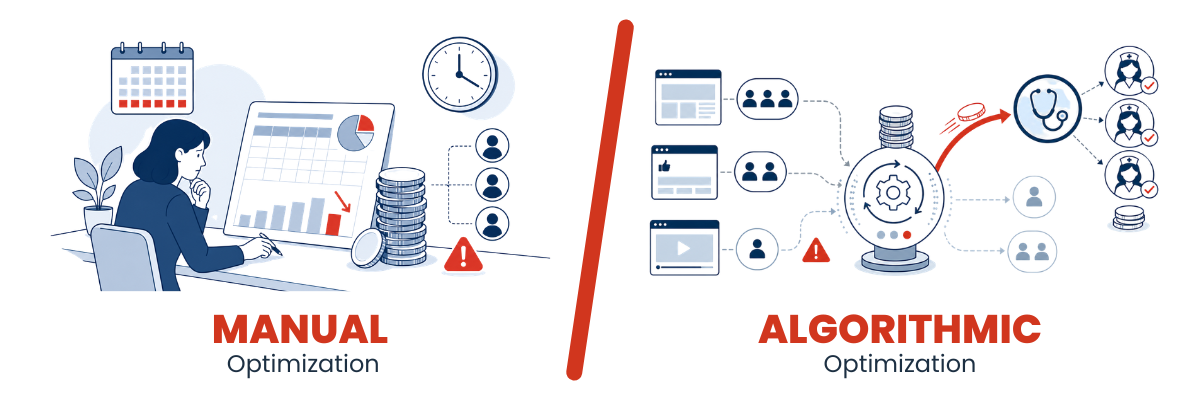
Here’s the before-and-after. The manual version: a recruiter pulls spreadsheets at month’s end, notices one board burned $4,000 on clicks that produced three applications, and shifts budget for next month, weeks after the money was wasted. The programmatic version: the algorithm spots the underperformance within days and quietly moves those dollars to the niche board delivering qualified nurses at a third of the cost.
What Is Full-Funnel Reporting?
Full-funnel reporting tracks performance from the first click through application, and ideally to interview and hire, across every advertising channel in one view. It answers the question flat-fee advertising never could: which sources produce hires, not just traffic?
What Is a Job Aggregator?
A job aggregator is a search engine for jobs that pulls listings from thousands of sources into one searchable destination. Aggregators are major traffic drivers in programmatic campaigns because that’s where a huge share of candidates begin their search.
What to Look for in a Programmatic Platform
Vocabulary is step one. Step two is choosing a partner whose solution aligns with your needs. Look for transparent, channel-level CPA reporting, frequent feed refreshes, no long-term contracts, and humans behind the algorithms who understand recruitment and your overall hiring goals.
That alignment is exactly why DirectEmployers built DE Amplify. As an employer-owned nonprofit founded in 2001 to reduce online recruitment costs, DirectEmployers has returned to its roots in online recruitment with a managed programmatic job advertising platform. DE Amplify handles feed integration, algorithmic placement, and automated spend reallocation, with full transparency into where every dollar goes and what it returned. Because it’s nonprofit-backed, the incentive is simple: make your budget go further, not spend more of it.
You don’t need to become a media buyer to benefit from programmatic recruitment or even get started. You just need to know the language well enough to ask sharp questions: What’s my cost-per-apply by channel? How often does the feed refresh? Who controls budget reallocation, and how fast?
Ready to see what your recruitment budget can really do? Talk to the DirectEmployers team about DE Amplify and put every advertising dollar to work on outcomes, not just impressions.

Let’s chat!
Fill out this form and we'll contact you shortly to schedule a demo.