Originally published June 27, 2013. Updated September 2026.
Career fairs give talent acquisition teams a valuable touchpoint to connect with prospective candidates, promote active requisitions, and strengthen ties with campus career centers, workforce development programs, and community partners. Still, simply booking table space and taking paper resumes rarely yields a meaningful return on your recruiting investment.
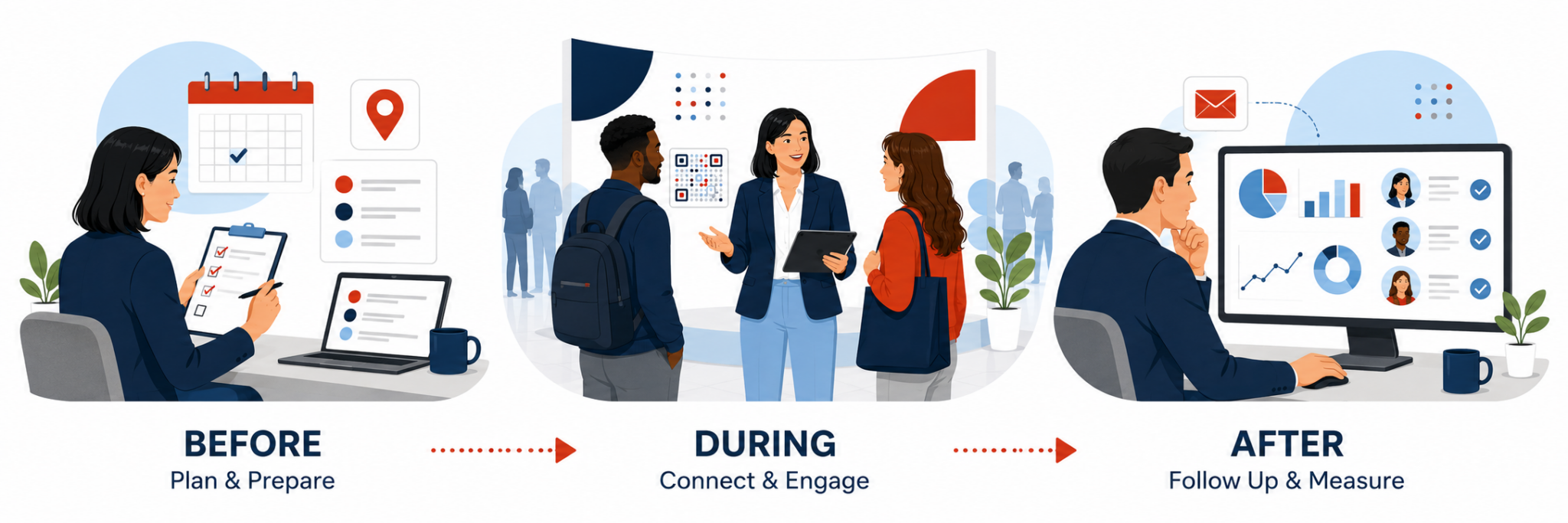
Modern recruiting workflows allow employers to bridge on-site conversations directly into applicant tracking systems, talent communities, and reporting dashboards using digital intake, QR codes, and source tracking. While these tools streamline logistics, overall success still hinges on establishing concrete objectives, preparing your booth staff, and delivering an accessible, professional candidate experience.
Whether your team is heading to a campus career fair, a community hiring event, or a specialized recruiting forum, these ten operational practices will help you maximize your time and budget.
1. Define What You Want the Career Fair to Accomplish
Before registering, determine what success should look like for your organization, and how you are going to measure that success.Your goals might include:
- Sourcing applicants for hard-to-fill or high-volume roles
- Building an active pipeline for recurring or upcoming headcount needs
- Expanding visibility for your employer brand
- Connecting with veterans, individuals with disabilities, recent graduates, or other targeted talent pools
- Building long-term relationships with schools and community-based organizations
- Pre-screening and scheduling on-site or follow-up interviews
- Documenting and supporting structured outreach efforts
Clear goals will help you determine which events warrant attendance, how to brief your recruiters or support team, and what metrics to evaluate once the event wraps up.
2. Select Events That Match Your Hiring Needs
Not every career fair aligns with your current workforce strategy. Before allocating budget and recruiter bandwidth, evaluate the host organization’s expected foot traffic, attendee profile, fellow employers, promotion schedule, and time or travel commitment.
Consider whether the event aligns with your:
- Open positions and required skills
- Hiring locations
- Internship or early-career programs
- Veteran and disability recruitment efforts
- Remote or hybrid opportunities
- Long-term workforce needs
Past attendance numbers can be helpful, but the quality and relevance of candidate conversations are generally more valuable than booth traffic alone.
3. Prepare the People Representing Your Organization
Select staff who are knowledgeable, approachable, and equipped to have substantive discussions with job seekers. Pair frontline professionals or hiring managers who can authentically address team culture and daily responsibilities with recruiters who know your hiring workflows inside and out. Alternatively, if you’re attending a specialized career fair, employ someone from that internal team to join to share their day-to-day experiences with job seekers.
In addition, provide your representatives with information about:
- Priority requisitions and forecasted openings
- Baseline qualifications and preferred skill sets
- Job locations and work arrangements
- Internship and early-career opportunities
- Pay ranges, especially where state or local wage transparency laws apply
- Step-by-step application instructions
- Realistic hiring timeframes
- Frequently asked candidate questions
- Accommodation request procedures
Ensure the team is aligned on how candidate details will be logged and what specific next steps to communicate at the end of each conversation.
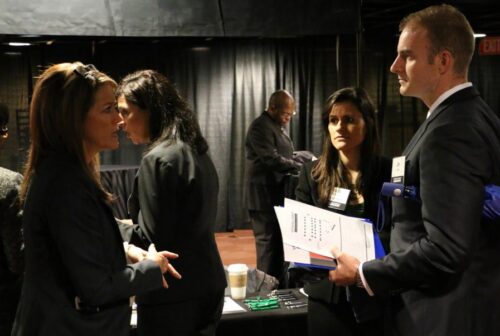
Recruiters and attendees connect during DirectEmployers’ Veterans Connect Career Fair in 2014. Photo credit: Brad Hoehner, Good Vibes Media.
4. Create an Accessible and Welcoming Experience
Accessibility should be part of the event plan from the beginning. The U.S. Department of Labor offers additional guidance for ensuring access for applicants with disabilities, including reviewing recruitment materials, online systems, interview processes, and accommodation procedures for potential barriers.
At the event, keep aisles and booth entrances clear, place materials within easy reach and avoid layouts that force candidates to speak across a table or navigate around unnecessary obstacles. Printed materials should use accessible fonts with sufficient size and color contrast. QR codes should link to accessible, mobile-friendly pages and be accompanied by a written URL or another way to access the same information.
Recruitment activities and application processes should be accessible to applicants with disabilities, eliminating barriers to applying. Employers should also provide a clear way for candidates to request an accommodation during the application or hiring process, so make sure those phone numbers and/or email addresses are attended so no candidates go overlooked.
An inviting booth does not require every representative to stand throughout the event. Recruiters can sit, stand or use the accommodations they need while remaining attentive, approachable and ready to engage.
For a broader discussion of accessible hiring practices and workplace belonging, listen to Advancing EEO Through Accessibility & Belonging.
5. Know Which Opportunities You Are Promoting
Job seekers expect more than high-level overviews of the business. Career fair attendees will want to know what jobs are open today, what credentials matter most, and how their experience might translate into an opportunity, and likely, what their day-to-day would look like in varying roles.
Consider creating a quick-reference internal guide for your event team that includes priority positions, required skills, hiring locations and application links. If your organization has extensive openings, steer candidates toward a dedicated, filtered landing page built specifically for the event.
If an event is purely pipelining for future hiring cycles, be upfront about it. Managing expectations protects candidate trust and prevents frustration down the line.
6. Give Candidates a Clear Digital Next Step
Rather than relying only on printed brochures and business cards, give candidates a clear digital way to engage with your organization.
Use QR codes, short URLs, event applications, or tablet check-ins to direct attendees to an appropriate next step, such as:
- Applying for a specific position
- Viewing jobs associated with the event
- Opting into your talent community
- Registering for a follow-up information session
- Scheduling a conversation with a recruiter
- Learning more about the company and employee experience
Whatever next step you provide should continue the experience candidates had at your booth. Recruit Rooster helps employers create career sites, talent communities and employer-brand content designed to strengthen candidate engagement throughout the recruiting process.
Audit every digital asset, form, and link on mobile devices prior to the event. Only request information your team actually plans to process, clarify how candidate data will be stored, and have a backup plan in case the venue has unreliable Wi-Fi or cellular service.
7. Prepare Consistent, Job-Related Conversation Questions
Because time per candidate is limited, provide staff with a core set of job-related questions to assess general alignment quickly and fairly.
- Questions might include:
- What types of roles are you exploring?
- Which skills or experiences would you most like to use in your next position?
- Are you interested in a particular location or work arrangement?
- What would you like to know about working for our organization?
- Are there specific opportunities you would like us to help you find?
Avoid treating every booth conversation as an unstructured screening interview. If formal interviews or assessments will take place during the event, communicate that in advance and use consistent, job-related evaluation criteria. Recruiters should also understand which questions employers should avoid during the hiring process, including questions that could reveal protected personal information.
8. Use Booth Materials and Giveaways Strategically
Your booth should make it easy for attendees to understand who you are, what opportunities you offer and why they should begin a conversation.
Use clear, concise messaging rather than filling the display with lengthy descriptions. Consider highlighting several priority positions, employee benefits, workplace differentiators or a straightforward invitation such as “Explore Careers” or “Talk With Our Recruiting Team.”
Promotional items can help break the ice, but they should serve to reinforce your brand rather than create artificial lines of people uninterested in your jobs. If you incorporate interactive activities, keep them accessible and offer low-barrier alternatives.
Always pack an on-site emergency kit: extra cables, backup power banks, extension cords, tape, pens, badge supplies, and hard copies of priority resources. A basic kit keeps logistical snags from interrupting your team’s workflow.
9. Follow Up While the Conversation Is Still Fresh
Before the event ends, ensure your team knows who will manage follow-up and how quickly candidates can expect to hear from your organization. Whenever possible, send an initial acknowledgment within a few business days.
Follow-up might include:
- Confirming receipt of resume or contact details
- Links to relevant openings
- An invitation to apply
- Information about any upcoming recruiting events
- A request to schedule an interview or additional conversation
- A message explaining that no appropriate openings are currently available
Applicant tracking systems, candidate relationship management platforms and email automation can make follow-up more consistent. However, automated messages should still be relevant to what candidates were told at the event.
Do not invite candidates to share their information if your organization has no plan to review it or communicate with them afterward.
10. Measure Results and Improve the Next Event
Total booth interactions and collected resumes are vanity indicators if they do not lead to pipeline movement, or ultimately, hires. Anchor event outcomes back to your recruiting systems so you can review downstream results.
Depending on your goals and technology, you may track:
- Meaningful candidate conversations
- Unique pageviews on the event landing page
- Talent community registrations
- Applications attributed to the event
- Conversion rate to qualified applicants
- Follow-up meetings or interviews
- Offers and hires
- Cost per qualified applicant or hire
- Relationships established with participating organizations
If your organization conducts targeted outreach to veteran or disability groups, tools like DirectEmployers’ Partner Relationship Manager (PRM) provide the documentation and outreach management solutions needed to record community interactions and assess their effectiveness.
Use dedicated tracking URLs, campaign parameters, and custom source tags to tie hiring activity to specific events. Finally, run a quick debrief with booth staff to review what worked, what fell flat, and where recruiting spend should go next year.
Make Career Fairs Part of a Connected Recruitment Strategy
Career fairs are most effective when they connect with and supplement the rest of your recruiting process. Clear goals, prepared representatives, accessible candidate experiences and reliable follow-up can turn brief conversations into qualified applicants, future talent relationships and better-informed recruiting decisions.
By connecting event activity with your applicant tracking system, talent community and recruitment analytics, your organization can measure results, identify the events that deliver the most value and continually improve its career fair strategy.