
Season 7 • Episode 7
What happens to workplace diversity when the regulatory landscape shifts overnight? In this episode, compliance consultant Alicia Wallace and former Fortune 500 Chief Diversity Officer David Casey move beyond theory to discuss the reality of leading through change.
Drawing on their history of managing hundreds of successful audits for some of the most recognizable brands, Alicia and David offer a masterclass in practitioner-level strategy. They pull back the curtain on what it really takes to bridge the gap between strict EEO compliance and meaningful culture, including how to go beyond “table stakes” as compliance is just the starting point, lessons from both sides of the OFCCP desk as the auditor and audited, and finally, a candid look at why merit-based hiring isn’t a threat to diversity, but a tool for data-grounded decisions.
Subscribe
Apple • Spotify • YouTube Music • iHeartRadio • Stitcher • TuneIn • Overcast • Pocket Casts • Castro • Castbox • Podchaser • RSS Feed
…or your preferred Podcast provider
About DE Talk
The DE Talk monthly podcast features honest and open dialogue between powerhouse industry experts on a variety of HR topics ranging from OFCCP compliance advice to emerging recruitment marketing trends, equal employment opportunity initiatives, and insightful solutions that help infuse new life into your HR strategies.
Episode Interviewer
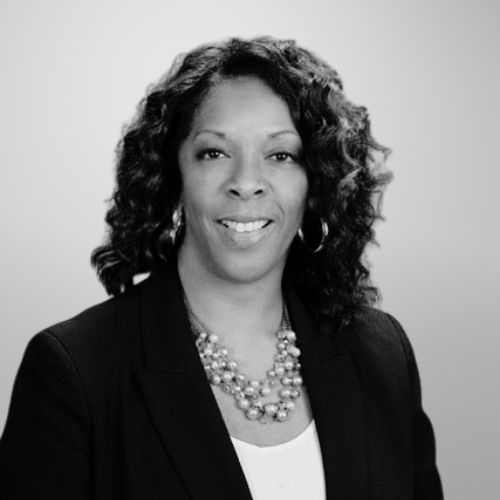
Alicia Wallace
Consultant
AHall Consult, LLC
Read Bio
Alicia Wallace, MBA, SHRM-CP, Sr. CAAP, is an accomplished HR compliance and EEO/AA professional with more than 25 years of experience guiding organizations through complex regulatory landscapes. Now stepping into the role of Consultant with DirectEmployers Association, Alicia brings deep expertise in corporate-level compliance, affirmative action, and diversity, equity, and inclusion–particularly in the areas of disability and veteran initiatives. Throughout her career, she has successfully managed hundreds of OFCCP audits, including multiple Glass Ceiling (Corporate Management) reviews and complaint investigations, earning a reputation as a trusted subject matter expert and strategic advisor.
Alicia has extensive experience partnering with business leaders, HR teams, and internal and external counsel to navigate EEO requirements, affirmative action planning, charge investigations, and diversity strategy. Her background also includes state-level EEO compliance, pay reporting, diversity analytics, and supporting procurement and sourcing teams with RFP and RFI data reviews. Known for her energetic, “can-do” approach, Alicia thrives in disciplined, fast-paced environments that demand change management, thoughtful risk-taking, and continuous improvement. Guided by a commitment to lifelong learning, she approaches her work with the belief that there is always an opportunity to be better every day–both for herself and for the organizations she supports.
Episode Guests
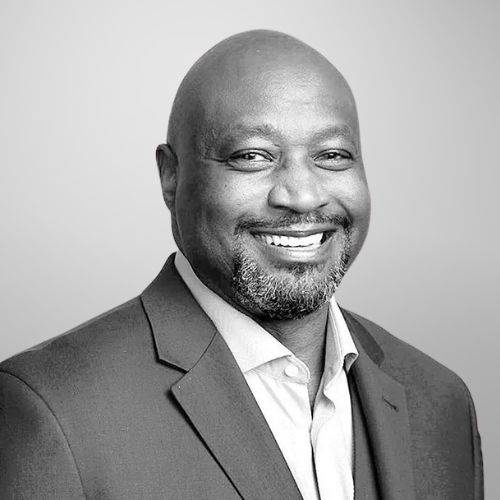
David Casey
Fortune 500 Chief Diversity Officer, Strategic Advisor and Consultant
Read Bio
David Casey is a seasoned Fortune 50 senior executive with more than 25 years of experience in Strategic Diversity Management, developing and executing talent, workplace culture, social impact, vendor inclusion and consumer engagement strategies for organizational growth. David has held key leadership roles for some of the country’s largest companies, including CVS Health and Elevance, having most recently served as the Chief Inclusion and Social Impact Officer at Tapestry, a global house of luxury fashion brands operating in more than 70 countries.
In addition to his corporate roles, David has also served as a trusted board member, advisor and appointee to such notable institutions as the U.S. House of Representatives, the U.S. Department of Labor, the American Lung Association, Disability:IN, National Urban League affiliates, the Hispanic Heritage Foundation, Year Up and the Fashion Institute of Technology.
An 8-year veteran of the United States Marine Corps, David served in Operation Desert Storm, gaining valuable lessons in leadership and global diversity and inclusion that have been instrumental in shaping a career dedicated to these principles. David holds a Bachelor of Science in Business Administration from Indiana Wesleyan University.
Transcript
DirectEmployers (00:00):
Get ready. The DE Talk podcast starts now, insightful conversations and dialogue, helping you put the human factor back in HR.
Alicia Wallace (00:09):
Welcome to the DE Talk podcast. I’m Alicia Wallace, a former longtime DirectEmployers Member. I’m proud of that, and now a compliance consultant for DirectEmployers. Over the course of my career, I’ve had the unique opportunities to see this work from both sides. I started on the government side as the senior compliance officer with the OFCCP, and then later I moved into private sector supporting EEO compliance at corporate headquarters for some of the largest healthcare networks, retail pharmacies, and recently pharmaceutical manufacturer. I can honestly say I’ve seen the work both from the auditor side and being audited, leading hundreds of audits to successful closure. Today I’m excited to take over the podcast and welcome my formal manager and longtime friend, and also industry subject matter expert David Casey for a conversation about diversity, EEO and all the disciplines that sit at the intersection of culture, compliance and business strategy.
(01:04):
Well, with rescission of Executive Order 11246, we’ve seen no shortage of webinars and guidance from legal teams, HR service providers and compliance professionals. They’ve all been very helpful. But what’s been notably quieter are the voices of diversity practitioners, the people who historically helped organizations translate compliance into some meaningful inclusive workplace practices aligned with business objectives. Are folks busy and reinventing their internal approaches, or are they trying to stay off the federal government radar? I think a little bit of both is going on. That’s still an open question in exactly why today’s conversation feels so timely. So we’re here to cut through some of the noise, bring clarity to the moment, talk honestly about how organizations can move forward in thoughtful, compliant, and people centered ways. So we’re going to dive into the conversation with my friend David. David, we’re just going to jump right in because I know you’ve been in the diversity management space for over 24 years and have experienced managing the work across several industries from some of the largest companies, both domestic and global. You have also managed HR compliance and affirmative action and EEO under your umbrella. Can you share with us, with the listeners a little bit more about your background? How do we get here?
David Casey (02:19):
I sure can, and thank you, Alicia, for having me on today. It’s great to reconnect with you. You and I go ways back. We’ll talk a lot about that. So again, just want to say thank you for having me on the podcast today, and thank you to DirectEmployers. A very, very timely and much needed conversation right now. So a little bit about my background. I always like to start with one thing that we both have in common. My military service. I was in the Marine Corps for eight years. I served as an electronics tech. My MOS is now defunct because the equipment I worked on back then no longer exists. That makes me feel a little old, but it is what it is. I took on my first head of diversity management in 2001 at what was then called Anthem, its now Elevance. There weren’t a whole lot of us back then, and I head of diversity roles, and I served in that role for eight years.
(03:09):
Then I went on to serve as the Chief Diversity Officer for CVS Health, which was a Fortune four for 12 years, and I most recently retired as a chief inclusion and social impact officer for a company called Tapestry, which is a global house of luxury fashion brands operating in over 70 countries. So it was really fascinating to do work on that level of a geographic scale. Now serving as a corporate advisor on matters related to strategic diversity management and a corporate social responsibility. I’m a native of Indiana, a little bit challenged this year by the Colts and the Pacers, but I haven’t historically been an IU football fan, but I jumped all over that bandwagon and I’ve had the pleasure of working with you at Anthem, as you mentioned before. And one thing, Alicia, that people may find a little funny, but it actually was strategic and our hiring of you back then when we were filling the opening, I was hoping we’d be able to fill it with somebody like you who actually worked inside the OFCCP, and we did it from the standpoint of, wow, wouldn’t it be great to have somebody from the agency because as they say, keep your friends close, but keep your enemies closer.
(04:17):
So I wanted to bring you in house.
Alicia Wallace (04:19):
That was a scary moment for me, by the way, just so you know that that was very scary. I thought, oh no, the corporate fight, no, we can up and do a lot of things, government, unless I do something, more illegal. I’m pretty set. So thanks for the introduction. So let’s go to question number two because I have several questions I want to cover during this podcast. So let’s start the conversation by having you share your thoughts on how two diversity management and compliance strategies. So two different things. So let’s talk about how they intertwined over the years we’ve worked together and when are corporate strategies, the management of diversity versus ensuring compliance and non-discrimination are taken into consideration because you and I both believe they go well together, but can you explain more about that?
David Casey (05:00):
Yeah, they do go well together. There’s a lot of interaction and alignment there. I mean, as you know and your audience knows affirmative action, EEO are both grounded and regulatory and legal statutes. Diversity management, on the other hand, is not a legal mandate. What it is is a business competency and a capability framework that not only takes into account all of your actions related to your internal employees and internal stakeholders like contractors, diversity management in the way that is different than affirmative action. And EEO also takes into account external stakeholders. So when you’re thinking about diversity management strategies, you have to think about consumers. You have to think about vendors, you have to think about the communities in which the company operates. So definitely takes into account all of the components of affirmative action, EEO, but it’s quite a bit broader in its context as well.
Alicia Wallace (05:51):
Let’s talk about how the two fields align and support one another, even whether they’re under one leader or not, or separate functions.
David Casey (05:58):
As I mentioned earlier, one thing I appreciated about having affirmative action slash EEO and strategic diversity management in my function, but our separate teams, was that it gave me the opportunity to explain the similarities that warranted having them in the same function and at the same time, the differences that warranted having them on different teams, which I had both at Anthem and CVS Health. Over that 20 some odd year career, I aligned to and implemented a strategic diversity management, which I’ll call SDM going forward. I implemented a model that was authored by the late Dr. R Roosevelt Thomas Jr. I know you remember that name from back in the day. He was considered by many to be one of the OGs in diversity management in corporate America. He unfortunately passed away back in 2014, but he was already decades ahead of his time in his thinking about this work.
(06:51):
So the four pillars that made up his model or make up his model rather are workforce representation. And that’s how organizations think about going out to bring talent into the organization. How do you ensure that you’re not missing any talent that’s out there in the market? The second pillar of the four is focused on workplace relationships, and that’s about the environment, having an inclusive environment where people can thrive and people actually get along and can actually work productively. And the third of the four is managing talent. Once you brought this talent into the organization, what are you doing with it? Do people have equal access to opportunity and growth, opportunity growth? Do you understand how to manage diverse talent? So the third pillar is all about that internal talent once you have it. And then the fourth pillar, as I mentioned at the start, that makes SDM little bit different than affirmative action and EEO, is that the fourth pillar is focused on external stakeholders.
(07:46):
So successfully managing strategic diversity management or SDM requires executing a strategy that takes into account all four simultaneously. And there is an obvious direct overlap and alignment across the workforce representation, the workforce relationships and managing talent pillars. Those three have always been and should continue to be implemented in compliance with regulations and legislation like Title VII, VEVRAA, Section 503, GINA, and others. So part of the narrative right now makes it seems like, oh, wow, companies better start getting into compliance. But the work has always been, and it has always been framed up by an overlap of how those regulations support the work of SDM. That’s nothing new. So we need to really stop talking about it like it is new. And I think very few people, including myself before I had first got accountability for affirmative action and EEO, very few people appreciate and understand the amount of statistical analysis that goes into compliance. And I think now more than ever, I believe compliance professionals bring a much needed skillset to the broader practice of diversity management. And why? Because compliance professionals know how to translate data into actionable insight. That’s literally why it’s called affirmative action, right? It’s not called affirmative data. It’s called affirmative action because you know how to take that data and turn it into an actionable plan and strategy for the organization. And I would say that again, now more than ever, every corporate leader needs that.
Alicia Wallace (09:20):
Well, David, that’s why you’re one of my favorite managers because you kind of get it and understand the work that compliance officials do and the time and effort. I always say we know all the business. We see the data every day, every day, and dig into the data. I also remember Roosevelt Thomas and that Diversity Academy, and I think he was called the Godfather of Diversity back then. That was kind of interesting. So thanks for sharing all that. So the big elephant is we are all, keep hearing the term illegal DEI. And you’ve worked with companies and executive, and you’ve been in the rooms where these conversations with executives and these conversations and strategies were discussed. So putting the word illegal in front of the term DEI was scary to me when I first saw it. And I thought, what the heck is that? And based on many taking action to change their communications about diversity, I would assume top executive on legal teams were worried, and it was the term that we hadn’t saw illegal DEI.
(10:13):
So share your thoughts and let’s talk about some myths about DEI being illegal so we can address it for the organization to ensure the workplace and space is not running a foul of Title VII or non-discrimination laws and how they’re all really inclusive, including white men. I can tell you, when we looked at data, we saw there was a white man that looked adverse impact. We looked at that too, and I can tell you that the government did. Sometimes they weren’t loud with what they did with that in that space, but it did occur, and anytime we saw some indicators that impacted men, it was usually addressed.
David Casey (10:44):
Yeah, yeah. And I tell that story a lot because I remember a time specifically when you and I were going through an affirmative action plan, and you mentioned to me that there were some goals in one of our markets where we have some goals focused on white men. And I think there’s just so many misunderstandings, disinformation, and misinformation about what this work actually is. It is inclusive of everyone. And as far as I’m concerned, the term illegal DEI, quote unquote, is an oxymoron. This body of work is literally grounded in ensuring that non-discrimination laws and regulations are followed. So that everybody, and I mean everybody, again, we have to get out of this rut of misinformation and disinformation thinking that it only benefits certain people. This work is about ensuring that everybody has access to opportunity and any violation of the law and anyone violating the law should be held accountable.
(11:41):
And that’s always been the case, and it should continue to be the case. But using this term illegal DEI is deliberately meant to instill fear, doubt, and confusion. And as you said, I think it successfully accomplished that. But we need to move beyond that now. We need to move beyond flooding of the zone with all of this disinformation and really focus on what the work has always been and what we need to refine and do better. Because any other body of work, we can get better. But let, let’s break through the misinformation and disinformation. And in fact, this term illegal DEI has been so confusing and so illy defined. The Second Circuit just expressed its own frustration about the lack of clarity in the administration’s definition of the term. The court don’t even understand how the administration is defining the term illegal DEI, because quite frankly, I don’t think the administration even knows what they mean by that.
(12:37):
So I will say this, there’s never anything wrong with any organization or any professional discipline for that matter, such as compliance professionals taking a step back to review and assess people programs and making sure that they’re in compliance. But that’s nothing new. That’s literally what you do. You all do every day, and it’s literally your job as compliance professionals. So to your point, I think a lot of people were nervous about the volume of information, the 40 some odd executive orders that came out on the first day of the administration that has something to do with diversity, equity, inclusion, affirmative action, EEO. Out of those 40 some odd executive orders that came out, half of them were directly related to this work. And I think people got overwhelmed by that. They were frightened, they were confused. But now we’re at a point where we can break through that noise and really get refocused on what the work actually should be and is all about.
Alicia Wallace (13:33):
Yeah, it’s so much confusion even from the beginning with the term affirmative action trying to define that, and then you add more to that. So it’s been a struggle. So now that affirmative action by race to gender, we know it’s rescinded from Executive Order 11246, the need to create goals for women and racial minorities is no longer, we don’t have to do those goals for federal contractors and diversity programs really included goals. We can no longer align ’em to some regulatory environment. However, I realized that not all organizations made the time and effort needed to ensure that alignment from the beginning. We know that. But going forward, without a focus on those goals, can you address other areas of diversity that had been successful in organization? Because I thought when you aligned your diversity programs with those affirmative action goals that were required, it was pretty successful. So now those are gone. Can you give me a version of some diversity missed around what we can do that’s been successful in organizations as far as aligning diversity, equity, and inclusion, and any organizational objectives that might’ve been going on?
David Casey (14:33):
Absolutely. The other piece of misinformation, disinformation that’s out there is that this work is only about compliance. It’s not aligned to business objectives. That’s not true. You might remember, and I remember it very, very well. So you may remember this particular meeting where we were debriefing one of our CEOs on an affirmative action plan. This is when I had accountability for both affirmative action, EEO and strategic diversity management, as we called it, in the same function, right? Different teams with same function. The CEO said something that I thought was very insightful that made me very, very proud. As a matter of fact, in that moment that they got it, the CEO said, Hey, thank you for this debrief. It’s critical that we are in compliance with regulations and legislation, but I also want to be clear that compliance is table stakes. That’s our starting point.
(15:29):
We should never do this work only because it’s a mandate. The CEO at that time said, I believe and I want to lead this work, and I want you all to lead this work with the understanding that yes, it is the right thing for our business and it’s the right thing to do. So we were fortunate enough, and maybe it was because we did a good job of really making sure that leadership understood that this is related to organizational objectives. Yes, it is compliance, but compliance in and of itself is not the mandate. Compliance as a means to an end to helping us meet our organizational objectives was always the mandate. And one as far as myth-busters, another myth-buster that’s out there that I think we need to focus on right now is this narrative around it’s either diversity management, it’s either affirmative action, it’s either EEO or merit.
(16:19):
And it’s like those things are counterintuitive or counteractive to merit. That’s nonsense. This work is about ensuring people’s decisions in any organization are not made on factors other than merit, and utilizing a plethora of analytical methods that you know much better than I do. Things like availability analysis, utilization analysis, impact analysis, standard deviation tests, fisher’s exact test. There was a whole bunch of those kinds of methodologies that you used to make my head spin with trying to explain them to me in my office. And I trusted your expertise. I sure as heck didn’t have it. But people, again, have no idea all of these statistical analytical methods that goes into this work to ensure that people decisions are being based on merit and made on merit versus other things. And one other myth-buster I want to throw out there, Alicia, is that this work, and we touched upon it a few seconds ago, is that this work excludes white men somehow or the other.
(17:19):
When I was at CVS Health, one of my accountabilities was in addition to strategic diversity management, was a team called Workforce Initiatives. And this team’s responsibility or accountability was to reach beyond the four walls of our organization to help build the talent that we needed as a company in our communities, A very, very innovative and progressive way to think about talent. So it wasn’t just about going out to recruit at job fairs or organizations that were producing this talent on our own. We produced some of talent, our own talent development programs that we managed in our communities. So I remember going out to Virginia for an event that the Atlantic Magazine was holding, and they wanted me to sit, and they didn’t have a fireside chat with one of the participants and one of the graduates of one of our workforce development programs. This was a middle-aged white male and in the community where he grew up and his family lived, used to be a big jewelry manufacturing community.
(18:17):
And as that industry evolved and went out of their community and left their community as a middle-aged white man, he was left with, I still have working years ahead of me. What am I going to do? I need to now totally shift my career set, my skillset, my talents, what am I going to do? And it just so happened that we were running a pharmacy technician program in that community. And this individual, again, mid-career midlife, went from working in the jewelry manufacturing industry to now pursuing a career as a pharmacy technician. And I like to share that one story. It’s one of many, but when people, again, they say, this work excludes white men, that is just categorically false and not true. And that’s just one example of a program that benefited a number of white people who lived in that particular community. So I think those are a couple of myths that as we’re having this narrative and having this conversation and finally having the time to breathe and excel a little bit after the flooding of the zone that happened in January and February, now that we can take a step back, pause and recenter the conversation where it should be, that’s one of the myths that we need to debunk.
Alicia Wallace (19:29):
Yeah, and I can tell you that it maybe came from a affirm of action being focuses on women and minority goals. However, when it came to non-discrimination and the data that you saw and who was impacted, it was everybody, whoever was impacted. But again, I never believed in shelf plans. You do the plans and you set ’em on a shelf and wait to be audited, which we were audited all the time, 10, 12 years. So I never had an opportunity to just sit that plan down. And
David Casey (19:54):
In
Alicia Wallace (19:54):
Some organizations, you can probably do that and say, oh, we’re not going to get audited. We’re not going to dig through the data. But the work came after the plans were done, not as you were developing them. And post compliance teams are pretty small. So you got to pick your fights and you have to focus on what the biggest problem is. You can’t do it all. There’s no way.
David Casey (20:11):
You may remember, Alicia, that at one point, we had a couple dozen open audits at the time, and I don’t know if this is still the case or not, but at the time, there actually was kind of a cap on how many audits that a company could have open. And we were getting pretty close to approaching that cap. And I don’t know if you remember, but I reached out, you and I had a conversation. I said, Hey, can we reach out to the OFCCP to maybe they don’t know that they have audits open against us, but we need to let them know that they’re getting pretty close to the cap. So yeah, you’re right. It can be extremely overwhelming.
Alicia Wallace (20:45):
And I will brag to say that they closed with us all successful. So we’re like, you’re continuing to audit us and you’re not finding anything. We had some areas of concern, maybe some things we could do better, but yeah, it was nonstop. I think 15 and the next year you get 10 and you get 12 with staff. It was a lot of work, and kudos to the people who really only have one or two a year. But at one point, the healthcare industry was really getting inundated with a lot of OCCP audits, and when they weren’t around is when you could really make some good of the work that you’re doing. When you’re in audit tenure, you have to kind of focus on what that audit requires. So yeah, that’s where most of my experie came from, getting all those audits. So we’re not going to finish a conversation without talking about VEVRAA and affirmative actions for individuals with disability and veterans, both big passions for you and I.
(21:33):
I still remember when you had me lead disability initiatives, things that other people weren’t doing in the organization, and that was a joy of my life, and it’s continued, but since we’re both veterans, I’m sure that passion is aligned with both of us. Also, remember all the visions you have for leading the individuals with disability work. So resorting in the organization, we got that Secretary of Labor’s award, that was my first corporate trip on a jet, so I’ll forever remember that. But talk a little bit about that space. That is a space that I think everybody can do a little bit better in.
David Casey (22:04):
Yeah, 100%. You’re spot on, Alicia. Both of these talent pools are still far too often overlooked even after all these years of having talked about them having led programs, these talent pools are both still too far overlooked. I like to win, and whatever company I’m working for, I want that company to win. So I’ve always considered it a competitive advantage to go after talent where other organizations aren’t looking. And these two talent pools are two talent pools that many organizations today still aren’t looking. So I always approached it as a competitive advantage for people with disabilities. For example, if you take into account individuals with chronic health conditions, some estimates suggest about 20% of the US population identifies as having a disability, and only 37% of those in the working ages of 16 to 64 are employed. That’s an opportunity as one of our longtime friends and stalwarts and tireless advocates in this space, Joy Spender would always say, when you are hiring people with disabilities, it’s no pity, just paychecks.
(23:08):
This is not just about the right thing to do. There are people with the skillsets you need in that population that you’re overlooking. So it’s good business sense, right? And the same is true for veterans. Now, the overall unemployment rate for veterans is a little bit more in line with the overall employment rate in general, but that’s not to say there’s still not an incredible opportunity to tap into that talent pool that brings a wealth of transferable skills. Again, I was the electronics technician in the military that taught me some transferable skills, how to problem solve, how to think innovatively, how to be creative that will translate and transfer to any industry segment. I mean, look at both of us. We’re both veterans now doing this work in corporate America. So we are living proof that veterans bring transferable skills, and both of those communities are extremely brand loyal and they believe in the old saying nothing about us without us. And what that means is if you want people with disabilities and veterans as consumers, they’ll expect you to also invest back into their communities, which includes hiring from their communities.
Alicia Wallace (24:12):
Absolutely. Whenever I try to reverse engineer where veterans best jobs for veteran personal disability, there is none. It’s just a multitude of jobs that both communities can be aligned to. I’m going to be honest and say that I am aligned with the current administration’s focus on merit always have been. And based on my personal viewpoint and experience in auditing and reviewing hundreds of federal contractors, both internal working for companies and from the government perspective historically, I will tell you that when I look at data in general, racial and ethnic minorities, really, they have oftentimes had to exceed those qualifications just to even be considered. So the merit part, I’m all in for that. So under federal affirmative action requirements, that was always the case. They looked at what these people were qualified when we were going out and trying to make decisions. So given that workforces are already diverse in many dimensions, David, including that remains critical to ensuring everyone feels valued. People know your skill sets, and if you’re not qualified for a job and you get in a role and you struggle a little bit, people know that too. So what guidance would you offer organizations on sustaining effective inclusive practices without alienating their workforce or their customer base, like you just talked about, while they’re trying to comply with both the federal and the state requirements, we’ve seen what has happened to some companies who just stepped totally away from their diversity programs drastically. We’ve seen it. So can you just talk to that for a minute?
David Casey (25:32):
Yeah, absolutely. First of all, I would say that companies need to understand and articulate both internally and externally, how and why inclusion benefits to organization, and broadly speaking, what organizations can benefit from along four lines, right? Tell me what organization wouldn’t benefit from these four things. Number one, ensuring that they are casting as wide of a net as possible to not miss out on any talent available in the workplace. That’s for starters. That’s number one. Number two, every organization out there has the need to cultivate a workplace where every single person, regardless of their identity, feels that they belong there and that their contributions matter. Number three, every single person in the organization should have access to opportunity regardless of their identity or background. Number four, the organization should have a workforce that understands both the customers that it has today, as well as the customers it’s going to need in the future and the customers that’s going to need to attract and acquire and retain for future growth.
(26:43):
So when you think about those four things, I would challenge you and everybody listening today to identify an organization that doesn’t need to care for those four things. So my guidance would be the organization is to make sure that you understand that and that you are articulating that both internally and externally, that has nothing to do with the divisive buzzwords that doesn’t make any kind of political statements. That, again, is just running that sound business management. And that’s really what this work is all about. Now, I would say that what diversity management practitioners need to do is build muscle in translating that macro data, right? There are research studies and there’s information out there that backs up why all four of those things are important. So there’s no shortage of information out there that backs that up, right? That’s how macro data. So what practitioners have to be able to do is to translate that macro data and all the research studies into specific opportunities for their respective organizations.
(27:44):
You can no longer just quote McKinsey. You have to be able to say, here’s what McKinsey said, but by the way, here’s what that means to our organization based on these specific objectives that we’re trying to achieve. And that’s where I go back to the role of compliance subject matter experts or sneeze, because compliance experts know how to talk the language of business, which is data, and in turn, translating that data into actionable insights. So now more than ever, if you work for an organization that has a compliance team and affirmative action and EEO team and also a diversity team, are they a part of the same function? If they’re not, they don’t have to be. But are you even talking to each other? Are our heads of diversity leaning into their compliance professionals to say, Hey, look, now more than ever, we’re being challenged to make sure that we can back up our work with data. That’s not necessarily our strong suit, but that’s literally what you do every day. Are those teams coming together? Are they working together and leaning into those skill sets and insights that the compliance professionals bring to the table?
Alicia Wallace (28:46):
And David, that takes us right to the measurement and future outlook of where we’re going. And many organizations either have or continue to reevaluate or recalibrate their diversity strategies right now, and employees are paying attention to that. From your experience, what are some of the most effective ways leaders can communicate those changes to diversity and inclusion efforts in a way that maintains the trust, engagement and the sense of belonging, especially during the times of legal and regulatory uncertainty? As we were saying, employees are paying attention. They want to know that you’re not discrimination and that your practices are fair if they didn’t understand affirmative action. They need to understand that if they understand the diversity strategy, they need to understand that. So give us some tools and tips around that.
David Casey (29:27):
Yeah, so Alicia, I would recommend kind of three steps in that regard. And actually before I jump into that, I would say that employees are paying attention and your customers are paying attention as well. Look at what’s happening with the boycott, sat, target, the other companies out there that are consumer facing, right in particular. So I would say you have to take into account that your employees are paying attention and your customers are as well. So step number one is going back to, and I’ll reiterate this point is very important for you to be able to articulate and for you to articulate. Just saying nothing is not the answer, but trying to be neutral is not an answer because I think that sends signals as well. You have to be proactively engaged in articulating internally and externally that diversity management is not just a program.
(30:15):
It’s not an initiative. What it is is an organizational capability and a competency that enables the company to get and retain the best talent to cultivate a workplace where people can and want to grow and contribute an organization that remains relevant in an ever-changing marketplace. Again, even if you don’t want to use the word that people may deem divisive diversity, when your marketplace changes, that is diversity. Every company has to be able to react to that. So be able to articulate why that’s important to your organization. Now, there are some complexities in the work itself, but the messaging does not have to be that complex. Step number two, please understand that no laws have changed. It makes the hair stand up on the back of my neck because I have none on the top of my head, but it makes the hair stand up on the back of my neck when I hear companies say that we’re shifting things right now in light of shifting laws. Yes, executive orders have been issued by the dozens, but the laws which require acts of Congress have not.
(31:18):
If you have been operating within the confines of the law, continue to do that. And if you have any uncertainty about whether or not you’re operating within the confines of the law, conduct your own internal audit to make sure you are clear on that, but make sure it’s done in the context of the actual law. Step number three, and again, I hope people don’t feel like I’m beating a dead horse, but I think that there’s, we’re at such a critical moment in time to tap into the talent pool and the skillsets of compliance professionals. So lean into your EEO and affirmative action teams internally and also lean into that talent that’s in the marketplace. As I mentioned earlier, data analytics hasn’t been a strong suit or a strong set among diversity management practitioners as much as it could be. And now as important as ever to know how to let the data talk and make opinions walk. I’ll say that again, this is about letting the data talk and opinions walk. In my last role as the chief diversity officer actually created a full-time DE&I data analytics role knowing that this would be a critical need. So I would say those are the three steps that I would encourage organizations to take and to think about in this context of legal and regulatory uncertainty.
Alicia Wallace (32:34):
Yeah, I think David, I would add to that as a lot of the diversity people are to connect with legal, and it’s been so much great legal guidance been given out through webinars. I’ll tell you, your EEO and front investment professionals have always been the sidekick to most legal teams. I can’t remember a day or a week that I would never did not talk to legal teams, different companies that I work with. Even if I was just looking at something on the side, I would always stay closely connected to my legal counsel, even if it wasn’t a diversity initiative. So we got the traditional race and gender-based goals. I think we talked about this. There’s no longer regulatory, they were the anchor for many. So we still have to measure some stuff and be accountable in our hiring efforts. So what indicators are still out there that leaders should be watching as the legal and compliance landscape continues to evolve over the next few years? Because we’re still going to be aligned and there’s still laws specific around hiring initiatives and measuring some of those things.
David Casey (33:29):
Yeah, absolutely. As I mentioned, the law hasn’t gone away. How many times have you heard organizations say, and as long as you and I have been in the corporate space, we’ve both heard it many, many times, dozens of times, not hundreds of times. Have you heard them say that this term, our people are our greatest asset? And if organizations really believe that, why wouldn’t they want and need to understand everything about that asset? We understand everything about every other asset that the organization owns, all of our equipment, our facilities, our technology. So if people are your greatest asset, why wouldn’t you want to understand 10 ways to Sunday everything there is to know about that asset. Now, if you don’t mean that people are your greatest asset, then you just stop saying it, say something else and don’t say it at all. Your greatest asset if they’re really not.
(34:18):
So when it comes to thinking about how do you navigate recruiting and how do you still think about metrics and measurement, there’s nothing illegal about having representation goals as long as you don’t break the law to achieve them. I’m going to say that again. There is nothing illegal about having representation goals as long as you’re not breaking any laws to achieve them. And one example of that that’s fresh off the press is the recent Missouri Starbucks case where the court held that the Attorney General’s allegations without facts are just theories and theories don’t establish jurisdiction or liability. Compliance professionals sit on the facts. You sit on the data. That’s where we need to lean into. And I would say, Hey, look, continue to search broadly for all talent. Make sure that you are looking under every rock, every organization is going to have priorities for the skill sets, the types of roles that they need.
(35:17):
But what are you doing to cast as wide of a net to ensure that you’re going after those skill sets that you’re not missing out on talent? So cast a broad net for all talent based on your priorities and continue to have internal development programs that everyone can access. And here’s the key, Alicia, to your point through data analysis, as you’re managing these recruitment and talent programs, use data analysis to see if there are groups who are adversely excluded, and then turn that data into actionable insights to ensure that everyone has access to grow. It’s just like running any other facet of your business.
Alicia Wallace (35:54):
Boy, I can remember those days having some data and being some concerned about something I saw and had to run the legal say, Hey, I see some indicators here. Can I dig a little deeper? Of course, they would get it protected, and you probably know many, many in depth conversations we had to have about some data. But the goal was to kind of look at it, do something with it, have a conversation about it, and then you decide how you address it. But to not even look at the data and not consider it out of fear of what may happen later, but you can certainly get all that protected and protect your company, get your data protected, protect your company. I’m going to say the word protect, protect, protect, because that was a big of mine too, is to also make sure that if something was going on or something, I saw indicators that the company heard it from me and not the federal government didn’t want to wait until the government comes and didn’t say, oh, yeah, by the way, we’ve had that issue for a long time.
(36:45):
I never brought anyone’s attention, or no one did anything with it. So that was always a scary part for me. But David, it’s been so great having this conversation and I know it’s been a quiet conversation that a lot of people have not had or maybe choose not to. Thank you so much for sharing your expertise and your perspective, and it’s just that it’s your perspective after having done this work and led it for a long time. As we wrap up today’s conversation, what stands out as just how connected these topics really are? Diversity, inclusion, clients, they’ve always worked hand in hand, even if they weren’t under one umbrella, even as a rule, and expectations around them have always evolved. Sometimes it was more focused in one area versus another, but in moments like this, the most effective organizations are the ones grounded in their diversity, equity, and their inclusion work in the objective data you talked about over and over, not opinion, not speculation, but grounded in objective data that they’re looking at doing.
(37:35):
So I think empowers leaders to make informed legal sound and truly impactful decisions that foster inclusion for all. One of the big things I hated is when leaders had to make decisions because someone else didn’t have the courage to tell ’em all of the information. When I was a little girl, we got in trouble for not sharing all the information. So that’s a pet peeve of mine. It’s not about reacting out of fear or pulling back. It’s about staying thoughtful, compliant, and focus on what actually works for the people and your business. We hope today’s conversation help bring clarity and calmed some of the noise you’re hearing out there and offer perspectives you can take back to your organizations. We appreciate DirectEmployers for setting up this conversation and allowing us to have this conversation. I know we’ve covered a lot of ground in our conversations. And quickly, David, if our listeners want to get in touch with you, what’s the best way to connect?
David Casey (38:23):
Hey, I would love to keep the conversation going, answer any additional questions people may have, offer insights. The best place to track me down will be LinkedIn. That is my platform of choice. So again, thank you. And also thank you to DirectEmployers.
DirectEmployers (38:37):
Thank you for tuning in for another episode of the DE Talk podcast. Stay connected with DirectEmployers on Facebook, Twitter, and Linkedin, or subscribe to receive updates straight to your inbox by visiting DirectEmployers.org/Subscribe where you’ll receive notifications of new episodes, webinars, events, and more.