
Key Takeaways
- On July 21, 2026, the EEOC voted to issue a formal NPRM proposing to rescind EEO-1 through EEO-6 reporting and related recordkeeping requirements.
- This is a proposed rule, not a final rule; a 30-day public comment period and an August 11, 2026 public hearing must occur first.
- Federal contractors must continue current EEO Data Report filing obligations until a final rule is issued.
- UGESP recordkeeping requirements for demographic data are separate from EEO-1 reporting and remain unaffected.
- OFCCP’s audit authority under Section 503 and VEVRAA is not impacted by this EEOC rulemaking.
End of summary box.
For contractors, the headline hasn’t changed. This remains a proposal, not a final rule, and current filing obligations stay in force while the rulemaking process plays out. But the pace and formality of this development make it worth a closer look at what’s actually in the NPRM, how it compares to the administration’s earlier statements, and what contractors should be doing in the meantime.
What Happened
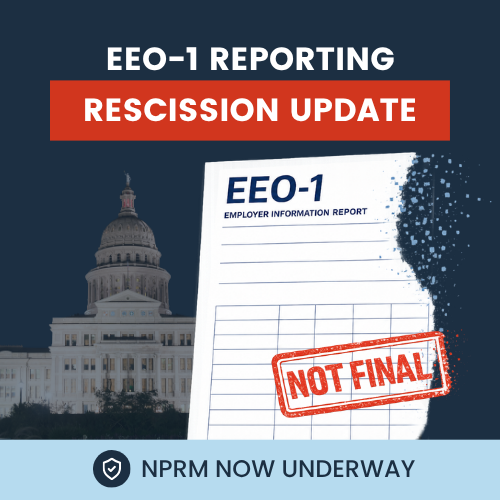
The EEOC’s May submission to OIRA has now cleared review and advanced into a formal rulemaking action. On July 21, the Commission voted to issue an NPRM proposing to eliminate the annual requirement that employers and other covered entities file aggregate workforce data by race and sex, along with the recordkeeping rules that support those filings. This is the same underlying proposal we’ve been tracking since spring, but it now carries the procedural weight of an actual rulemaking docket rather than an internal budget office review.
The Commission’s rationale centers on cost and legal exposure. According to EEOC estimates, the current data collection requirement imposes costs of almost $275 million on employers every year, as well as almost $4 million of costs on the EEOC to administer this data collection. More substantively, the Commission determined that the EEO Data Reports are inconsistent with equal employment opportunity law, may raise constitutional concerns, and collect data that is not narrowly tailored or necessary to enforce anti-discrimination statutes. The NPRM frames this as an issue of statutory authority: Title VII does not require the EEOC to impose these reporting obligations, and the agency may eliminate them when they are inconsistent with the law, not useful, or counter to enforcement priorities.
Chair Andrea Lucas tied the proposal directly to the agency’s colorblindness framework, stating that requiring employers to categorize employees by race and sex annually, absent any specific allegation of discrimination, stands in tension with Title VII and raises constitutional concerns, while emphasizing that the Commission’s authority to request specific, tailored records relevant to a charge investigation remains unchanged.
Where the Process Stands Now
The NPRM will publish in the Federal Register for a 30-day comment period, and the Commission has scheduled a public hearing on the proposal for August 11, 2026, with requests to testify due by August 7. Consistent with the Administrative Procedure Act, the EEOC will need to review all public comments before issuing any final rule. That process takes time, and it is not guaranteed to conclude before this year’s typical EEO-1 filing window.
Implications for Federal Contractors
The core guidance from our May update hasn’t changed, and this development reinforces it rather than replacing it.
Reporting obligations remain active until a final rule says otherwise. Contractors should continue preparing workforce demographic data as though the current filing cycle will proceed. Nothing in an NPRM changes existing regulatory requirements.
Recordkeeping is a separate question from reporting. Even if the EEO Data Reports are ultimately rescinded, UGESP recordkeeping obligations tied to disparate impact analysis are grounded in separate legal authority. Contractors should not treat this proposal as a signal to pause internal demographic data collection.
OFCCP audit authority is untouched. This rulemaking addresses EEOC reporting requirements. It has no bearing on OFCCP’s authority under Section 503 or VEVRAA, and contractors should not conflate reduced EEOC reporting burden with reduced federal contractor compliance exposure more broadly.
Watch the comment period as a signal, not just a formality. Given the scale of this change, the volume and substance of public comments filed over the next 30 days, along with testimony at the August 11 hearing, will likely shape how quickly and in what form a final rule takes shape.
How to Stay Ahead of the Curve
This rulemaking sits alongside several other regulatory threads DirectEmployers has been tracking this year, from the EEOC’s new National Enforcement Plan to shifting guidance on disparate impact theory. Taken together, they describe an agency actively reshaping its regulatory footprint while its enforcement priorities continue to evolve. Federal contractors managing HR compliance across multiple fronts need a source that connects these developments rather than treating each one in isolation.
DirectEmployers will continue monitoring this NPRM through the comment period and report on the August hearing and any resulting developments. Members with questions about current EEO-1 obligations or how this proposal intersects with broader compliance strategy are encouraged to connect with their Membership Team, engage with peers in the DE Connect discussion forum, or attend an upcoming Member Office Hours session.
THIS COLUMN IS MEANT TO ASSIST IN A GENERAL UNDERSTANDING OF THE CURRENT LAW AND PRACTICE RELATING TO OFCCP. IT IS NOT TO BE REGARDED AS LEGAL ADVICE. COMPANIES OR INDIVIDUALS WITH PARTICULAR QUESTIONS SHOULD SEEK ADVICE OF COUNSEL.

Let’s chat!
Fill out this form to indicate which solutions you’re interested in and we'll contact you shortly to schedule a demo.