
Originally published June 2, 2026. Updated to reflect the regulatory environment following the Section 503 Final Rule, effective September 21, 2026.
Key Takeaways
Section 503 compliance is about more than meeting federal requirements—it’s about creating a workplace where individuals with disabilities can successfully apply, contribute, and grow. Employers should take a holistic approach by reviewing their disability inclusion efforts regularly, ensuring accommodations are available throughout the employee lifecycle, improving accessibility, training managers and employees, building relationships with disability-focused organizations, and using data to measure progress. By treating disability inclusion as an ongoing business strategy rather than a compliance exercise, employers can strengthen both their workforce and their Section 503 outcomes.
End of summary box.
Overview of Section 503 & Its Relationship to Americans with Disabilities Act (ADA)
I view Section 503 compliance as an enhanced extension of the Americans with Disabilities Act (ADA). While Section 503 is specifically geared toward organizations with government contracts of $20,000 or more, its provisions offer significant guidance that is applicable to employers seeking greater inclusion of individuals with disabilities.
Federal Contractor & Subcontractor Section 503 Obligations
Section 503 regulations establish nondiscrimination, affirmative action, reasonable accommodation, outreach, and recordkeeping obligations for covered federal contractors and subcontractors. OFCCP has historically evaluated Section 503 compliance through compliance evaluations, including Section 503 Focused Reviews. A Section 503 Focused Review was a compliance evaluation specifically examining a contractor’s policies and practices related to Section 503, including reasonable accommodation and employment practices affecting individuals with disabilities.
Following the revocation of Executive Order 11246 in January 2025, OFCCP placed its Section 503 and VEVRAA activities in abeyance while it separated those programs from its EO 11246 enforcement activities. The abeyance was subsequently lifted, allowing OFCCP to resume Section 503 and VEVRAA complaint activity. However, because the prior compliance review process was closely intertwined with EO 11246 reviews, OFCCP administratively closed pending compliance reviews and has not reopened the Section 503 and VEVRAA AAP certification process while it revises its processes and systems. Contractors should therefore continue to comply with their Section 503 obligations even though the compliance review landscape is currently in transition.
Effective September 21, 2026, OFCCP’s final Section 503 rule significantly changes several of the contractor obligations, but still retains the core statutory obligations, which include:
- Nondiscrimination Protections: Covered federal contractors and subcontractors must not discriminate against qualified individuals on the basis of disability in employment.
- Reasonable Accommodations: Contractors must continue to provide reasonable accommodation to the known physical or mental limitations of otherwise qualified individuals with disabilities, unless doing so would impose an undue hardship. The Final Rule did not change these reasonable accommodation requirements, and contractors are encouraged to maintain clear accommodation procedures to prevent barriers to employment.
- Affirmative Action Programs (AAPs): Contractors with 50 or more employees and a single federal contract or subcontract of $50,000 or more must continue to develop and maintain a written Section 503 AAP and implement and document their affirmative action efforts on an annual basis.
- Outreach and Recruitment: Covered contractors must continue to undertake appropriate outreach and positive recruitment activities designed to effectively recruit qualified individuals with disabilities, annually assess the effectiveness of their outreach and recruitment efforts, and document those activities. However, contractors are no longer required to use quantitative data on disability referrals, applicants, or hires when assessing the effectiveness of their outreach efforts and affirmative action program.
- Recordkeeping: Contractors must continue to maintain required records. Outreach and recruitment documentation required under 41 CFR 60-741.44(f)(4) must be retained for three years. Other personnel and employment records generally must be retained for two years, subject to applicable regulatory exceptions.
Prior to September 21, 2026, covered contractors and subcontractors were required to establish a 7% utilization goal for individuals with disabilities within each job group, as well as conduct an annual utilization analysis and develop action-oriented programs when the goal was not met. In addition, Section 503 required contractors to invite voluntary disability self-identification at the pre-offer and post-offer stages of the hiring process and at least once every five years thereafter, using Form CC-305. Effective September 21, 2026, the final rule eliminates these regulatory disability-inquiry and utilization-goal requirements, and the CC-305 form has been discontinued.
Disability Inclusion & Benchmarking
Beyond government audits, many organizations have participated in benchmarking efforts. These include completing the Disability Inclusion Blueprint managed by the National Organization on Disability (NOD) and the Disability Index managed by Disability:IN, formerly known as the United States Business Leadership Network (USBLN). Additionally, Fair360, formerly known as Diversity Inc, places emphasis on disability inclusion benchmarking as a portion of their top employer listings for many years. These benchmarks allow organizations to monitor their disability inclusion efforts and improve employment outcomes by comparing data from 150+ others across various industries.
Changes in Practice & the Importance of Review
Over the past year, many disability benchmarking practices have been discontinued or paused for the time being. Several of these initiatives were valuable, offering benchmarking data and recommended best practices for federal contractors subject to Section 503 requirements. To be clear, the revocation of Executive Order 11246, directly affecting affirmative action for women and minorities, did not remove the affirmative action requirements for Section 503 of the Rehabilitation Act or the Vietnam Era Veterans’ Readjustment Assistance Act (VEVRAA) as amended. Those efforts should still be ongoing without a lapse in efforts.
Recommendations for Employers
Amidst the changing landscape, employers should pause to review their past compliance efforts in the disability compliance space, and consider how to maintain and/or strengthen their commitment to disability inclusion moving forward, prior to OFCCP establishing revised compliance review protocols. Consider an internal review of your Section 503 compliance.
Experience Managing Diversity Disability Inclusion & Section 503 Compliance
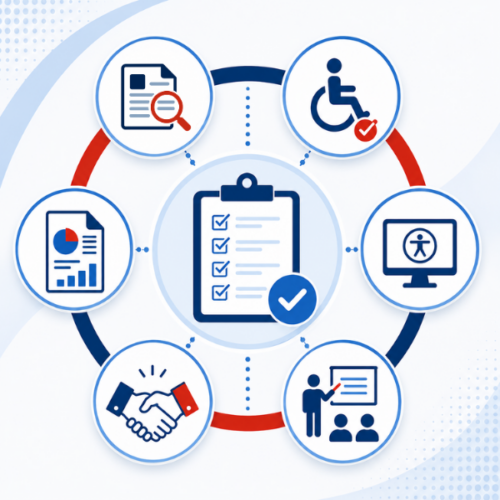
Key areas employers should evaluate as part of an ongoing Section 503 compliance and disability inclusion strategy.
Over the years, I have managed diversity and disability inclusion programs and overseen Section 503 compliance efforts, while also participating in more than 100 audits throughout the process. This experience provided valuable insights and practical tips that proved effective in not only achieving Section 503 compliance but also assisting with integrating disability inclusion as a key component of the organization’s broader inclusion strategies. The following actionable efforts and recommendations I found to be particularly useful throughout my career, and I encourage you to consider adapting or adopting them to strengthen your own organization’s approach to disability inclusion.
Establish End-to-End Accommodation Support Across the Employee Lifecycle
Take effort to ensure the accommodation process is communicated throughout the organization to include the applicant phase, onboarding, and ongoing employment. Conduct periodic reviews of accommodations requested, granted, and denied; ensure managers understand when the interactive process is triggered; and provide annual training. Make sure your HR team and managers are familiar with the process and know who to contact when they have questions.
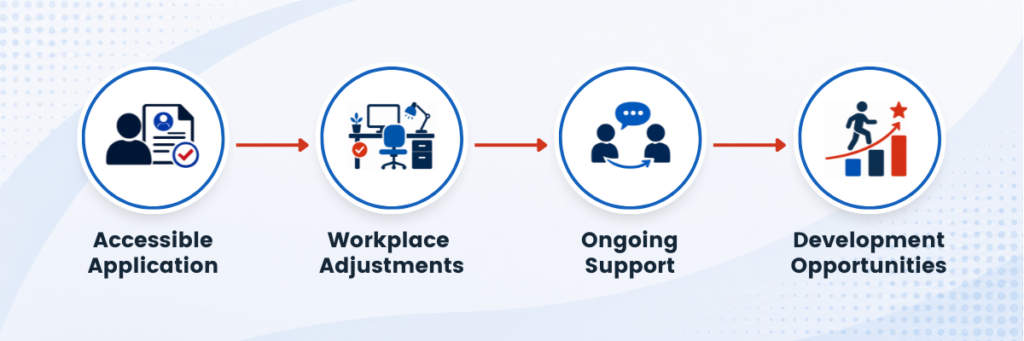
A successful accommodation strategy extends beyond hiring to include workplace adjustments, ongoing support, and opportunities for professional growth.
Engage with Disability-Focused Employee Resource Groups (ERGs) with Appropriate Governance
If your organization has a disability-focused employee resource group (ERG) or business resource group (BRG), try to engage with them and join as a member. When a discussion among the group has compliance implications, and it will, you can address them along the way and assist early to ensure items requiring further discussion or review are mapped to an appropriate HR member or legal, as needed. These groups should be cautioned not to use their forum to bypass established HR policies or practices, and should make it clear that they are open to all employees, regardless of disability status.
Provide Disability Etiquette Training
Offer training that builds practical understanding of disabilities for employees and co-workers, leveraging credible resources and emphasizing that disabilities vary; reinforce respectful practices to reduce risk of complaints. Use learning in the disability space to increase inclusion!
Build Partnerships with National & Local Disability Organizations
Attend disability-focused conferences and webinars and subscribe to receive the Office of Disability Employment Policy (ODEP) alerts. ODEP is an agency within the Department of Labor, however they are not an enforcement agency. They are an agency that provides a plethora of information focused on individuals with disabilities, as well as disability policies, and practices. Combined with ODEP, you may also leverage another disability-focused partner resource, the Job Accommodation Network (JAN). Both will assist you in understanding multiple types of disabilities and stay current on effective practices and policies. Confirm digital accessibility across systems and vendors. Ensure the organization’s website, applicant tracking system, products/services, and key vendor platforms meet the ADA and Web Content Accessibility Guidelines (WCAG) accessibility requirements. In addition, verify that your stakeholders, subsequent subcontractors, and vendors understand both Section 503 and Section 508 obligations.
Review Job Requirements on a Defined Cadence
Periodically evaluate job descriptions and qualification standards to confirm that all your job descriptions and postings include occupational requirements which are current, relevant to the position, and non-exclusionary without reason. Revise outdated language which could create unnecessary barriers for individuals with disabilities. For example, “Must be able to lift 50 pounds.” Unless the core responsibilities of the job require the candidate to lift 50 pounds or more, consider changing the job description requirement to a range much like the following, “Minimally must lift 25 pounds without assistance; may lift over 25 pounds with or without assistance.”
If you have any questions regarding the information provided above or wish to learn more about my experience managing over 100 audits, which included Section 503 compliance requirements, I am available to discuss these topics in greater detail, and provide insights as to your specific instance. I welcome you to use the insights shared here to develop a program tailored to your needs.
For further details on Section 503, DirectEmployers offers several resources available in DE Connect, as well as past blog posts to provide guidance:
- What is Section 503? How Do I Comply as a Contractor?
- An interactive Section 503 checklist of best practices (downloadable PDF available)>
- Jurisdictional Threshold Update for Section 503, as of 2026
In addition to being the “gold standard in VEVRAA compliance” DirectEmployers also offers a suite of solutions for Section 503 outreach and support—all as part of its Membership. From job delivery to vocational rehabilitation counselors around the country to an in-house certified ADA coordinator, Michelle Krefft, who can provide guidance program reviews, assistance and insights to help you further develop your disability inclusion programs.
National Disability Employment Awareness Month (NDEAM)
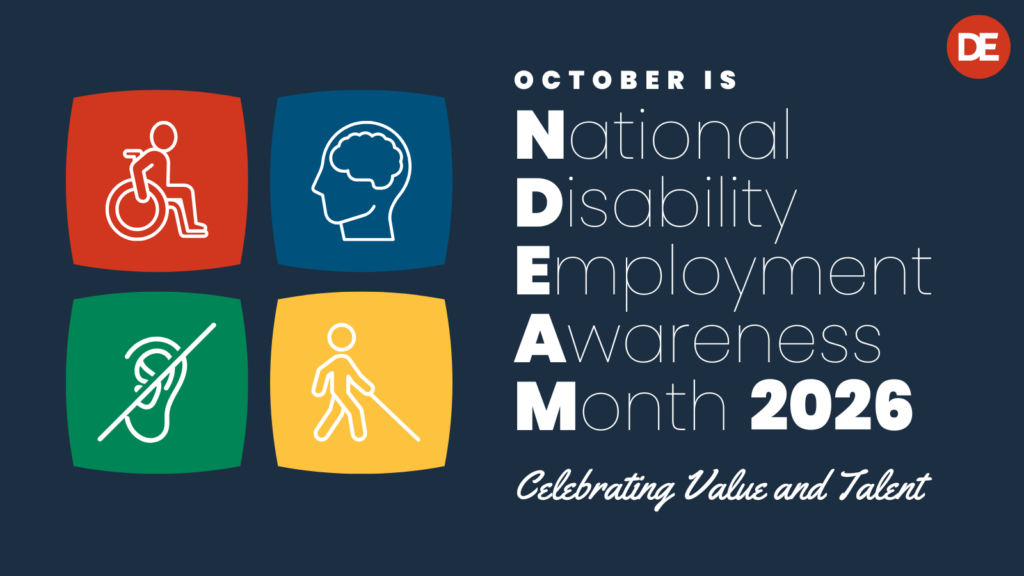
Finally, make sure to mark your calendars for this year’s National Disability Employment Awareness Month (NDEAM)! During the month of October, the Office of Disability Policy (ODEP) will once again be “Celebrating Value and Talent,” carrying the spirit of last year’s celebration forward through 2026 in honor of America’s 250th birthday. Stay tuned for more from DirectEmployers on how you can celebrate alongside us!

Alicia Wallace
Consultant, AHall Consult, LLC
Alicia Wallace, MBA, SHRM-CP, Sr. CAAP, is an accomplished HR compliance and EEO/AA professional with more than 25 years of experience guiding organizations through complex regulatory landscapes. Now stepping into the role of Consultant with DirectEmployers Association, Alicia brings deep expertise in corporate-level compliance, affirmative action, and diversity, equity, and inclusion–particularly in the areas of disability and veteran initiatives. Throughout her career, she has successfully managed hundreds of OFCCP audits, including multiple Glass Ceiling (Corporate Management) reviews and complaint investigations, earning a reputation as a trusted subject matter expert and strategic advisor.
Alicia has extensive experience partnering with business leaders, HR teams, and internal and external counsel to navigate EEO requirements, affirmative action planning, charge investigations, and diversity strategy. Her background also includes state-level EEO compliance, pay reporting, diversity analytics, and supporting procurement and sourcing teams with RFP and RFI data reviews. Known for her energetic, “can-do” approach, Alicia thrives in disciplined, fast-paced environments that demand change management, thoughtful risk-taking, and continuous improvement. Guided by a commitment to lifelong learning, she approaches her work with the belief that there is always an opportunity to be better every day–both for herself and for the organizations she supports.

Let’s chat!
Fill out this form to indicate which solutions you’re interested in and we'll contact you shortly to schedule a demo.