
DirectEmployers Blog
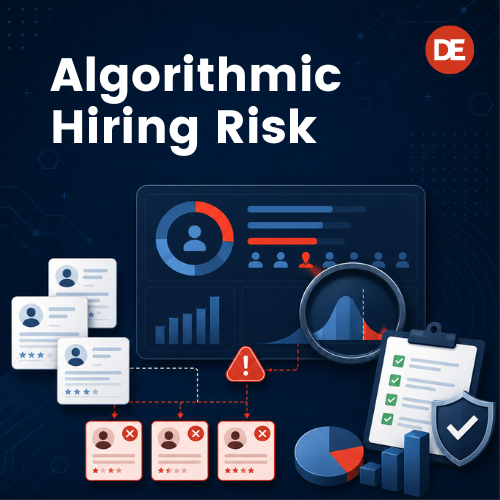
When Hiring Algorithms Go Unmanaged: What the Stanford Algorithmic Hiring Study Means for HR Compliance
Key Takeaways A Stanford study of 3.4 million real job applicants found that more than 25% of applications from Black candidates and nearly 15% from Asian candidates were directed to positions that produced adverse impact under Title VII standards. That risk was not...
A Federal Contractor’s Plain-Language Guide to the DOJ’s Opinion Letter on EEOC Disparate Impact
Key Takeaways On June 9, 2026, the Department of Justice's Office of Legal Counsel (OLC) issued a formal opinion letter to the Equal Employment Opportunity Commission (EEOC) concluding that its longstanding guidelines on disparate-impact liability under Title VII of...
The White House Just Signaled Where AI Policy Is Heading: What Federal Contractors Need to Know
Key Takeaways On June 2, 2026, President Trump signed an Executive Order 14409 titled Promoting Advanced Artificial Intelligence Innovation and Security, directing federal agencies to accelerate AI-enabled cybersecurity defenses, establish an AI cybersecurity...
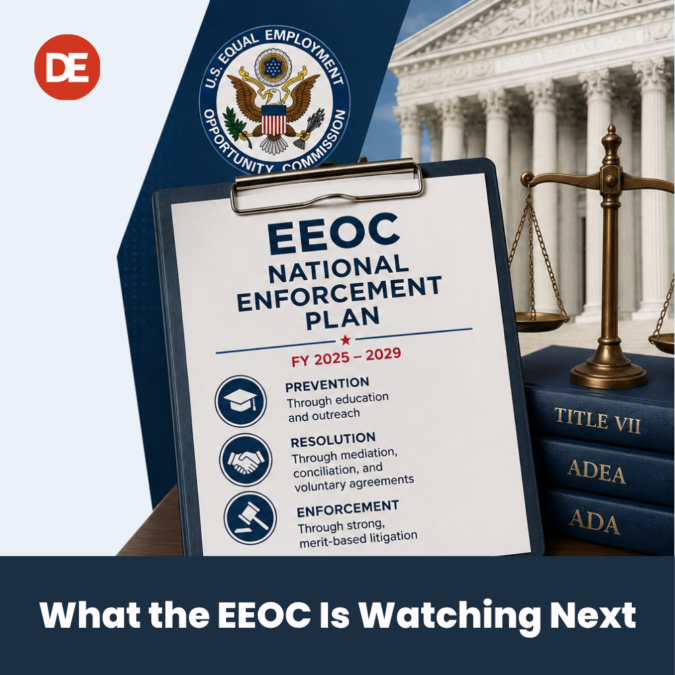
The EEOC Just Told You Where It’s Looking Next: A Federal Contractor’s Guide to the New National Enforcement Plan
Key Takeaways On June 4, 2026, the EEOC formally approved a new National Enforcement Plan (NEP) covering fiscal years 2025–2029, replacing the agency's previous Strategic Enforcement Plan. The NEP reaffirms the EEOC's three-pronged approach to eliminating workplace...
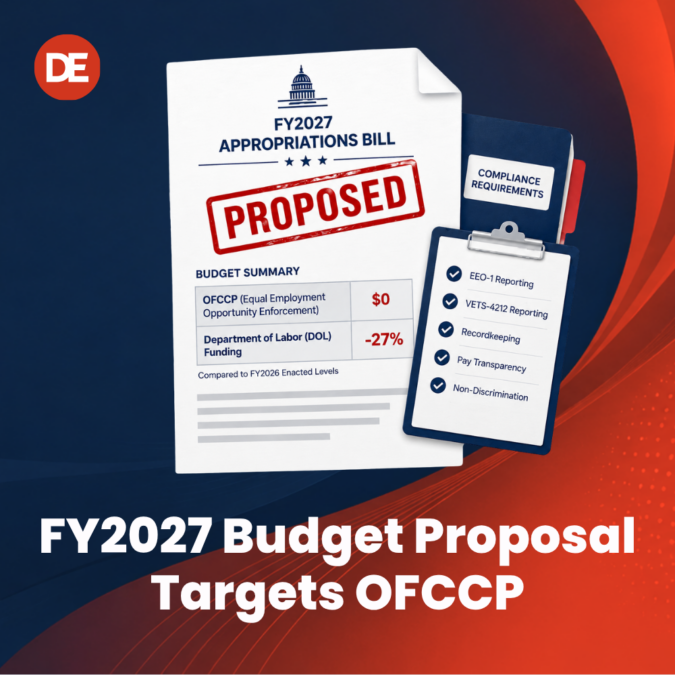
FY2027 Appropriations Bill Proposes to Zero Out OFCCP & Cut DOL Funding by 27%
Key Takeaways On June 4, 2026, the House Appropriations Committee released its FY2027 Labor, Health and Human Services, Education, and Related Agencies (LHHS) Appropriations Bill, with a subcommittee markup underway as of June 5th. The bill proposes to eliminate all...
DOL Waves in a New Era of Regulatory Clarity with Four Fresh FLSA Opinion Letters
Key Takeaways The Department of Labor’s latest batch of FLSA opinion letters (FLSA2026-5 through FLSA2026-8) signals a sharp return to clear, scenario-specific compliance assistance as shared by Administrator Rogers at DEAMcon26. Key rulings confirm that salaried...
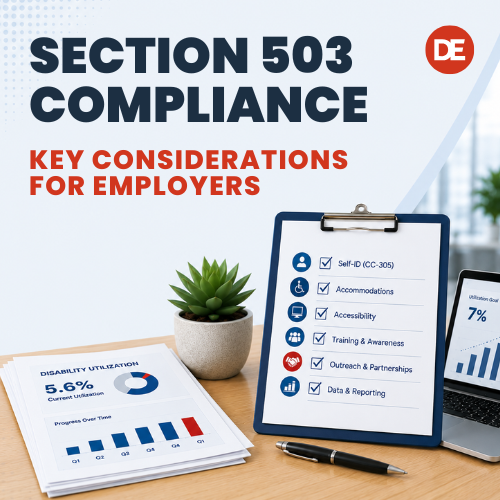
Section 503 Compliance: Key Considerations for Employers
Originally published June 2, 2026. Updated to reflect the regulatory environment following the Section 503 Final Rule, effective September 21, 2026. Key Takeaways Section 503 compliance is about more than meeting federal requirements—it’s about creating a workplace...
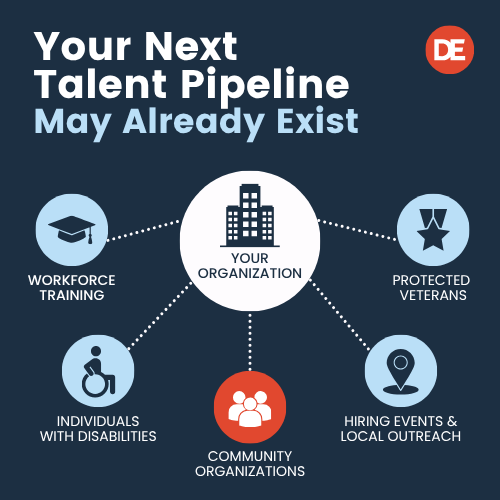
What Is a CBO? How Federal Contractors Can Turn Community Partnerships Into Talent Pipelines
Key Takeaways Community-based organizations (CBOs) are nonprofit workforce development partners that connect federal contractors to skilled, job-ready candidates from underrepresented communities—including protected veterans, individuals with disabilities, and more....
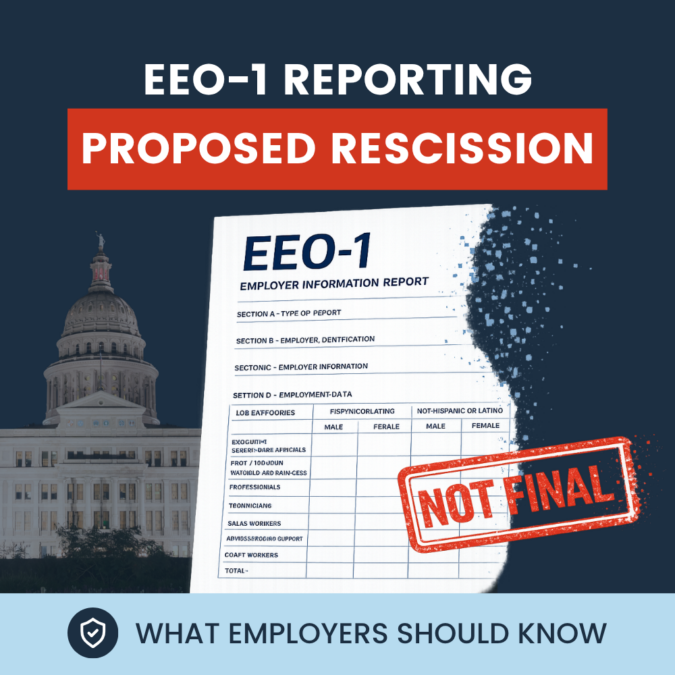
EEOC Proposes to Rescind EEO-1 Reporting Requirements: What Happened, Where the Process Stands & How this Affects Federal Contractors
Key Takeaways On May 14, 2026, the EEOC submitted a formal proposal to the White House's Office of Information and Regulatory Affairs (OIRA) to rescind EEO-1 reporting requirements, along with EEO-2 through EEO-5. It’s important to note that this is a proposal, not a...
DEAMcon26 Day 3 Recap: Pay Equity, ChatGPT, Free Sourcing Tools, and a Closing That Left Nobody Comfortable Staying Still
Key Takeaways The final day of DEAMcon26 delivered a high-density roadmap for navigating the intersection of talent acquisition, AI, and federal compliance. Key highlights included Brian Fink’s demonstration of free Google Custom Search Engines to bypass expensive...